A Michigan Town Forgot to File One Form in 1987 — and Accidentally Protected 200 Acres of Wetlands Forever
The Dam Nobody Thought Twice About
In the summer of 1987, the township of Harlan Creek, Michigan — population somewhere around 2,400, depending on who was counting — decided to remove a small, aging dam from a creek that ran along the western edge of town. The dam had been there since the 1940s, it was deteriorating, and the township engineer had been recommending its removal for years. Nobody was particularly emotional about it.
A crew came out, took the structure apart over a long weekend, and that was that. The creek resumed flowing naturally. Over the following months, the land around the former dam site did what land tends to do when you stop interfering with it: it got wet, then wetter, and then it became something that looked very much like a marsh.
The township filed the project under 'infrastructure maintenance' and moved on to other business.
What they did not file was the mandatory environmental impact assessment required under Michigan's Inland Lakes and Streams Act for any project that altered natural waterways. It was a bureaucratic step that should have been routine. It just never happened.
For thirty years, this omission sat quietly in a filing cabinet — or rather, conspicuously absent from one.
Nature Did Its Part Without Being Asked
The wetlands that formed after the dam's removal were, by any ecological measure, a success story. Over three decades, the area expanded to roughly 200 acres of functioning marsh habitat. Migratory waterfowl began using it as a stopover. Native plant species recolonized the banks. The Michigan Department of Natural Resources, in a 2014 survey, noted the site as an example of 'successful passive restoration' — meaning nature had fixed what humans had broken, without any intentional human help.
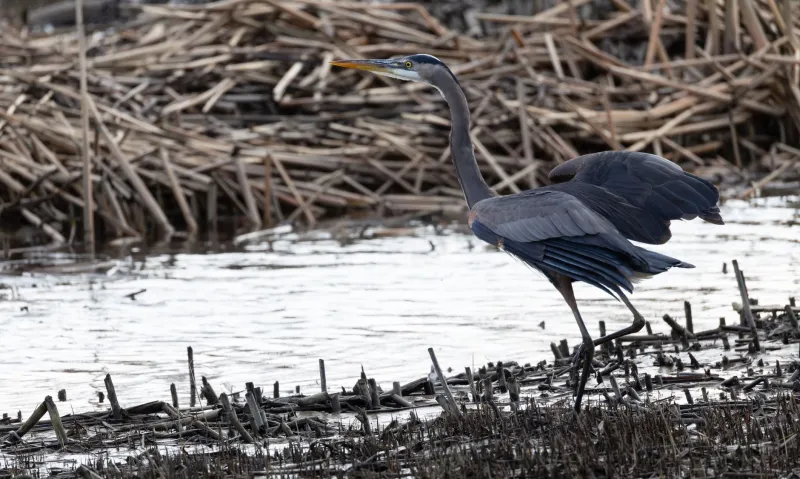
Local residents mostly just thought of it as the swampy area west of town where you could sometimes spot herons.
The township wasn't managing it as a preserve. They weren't promoting it as a conservation site. As far as the local government was concerned, it was just land that happened to be wet — land that, incidentally, appeared on county records as municipally owned and therefore theoretically available for other uses.
That theoretical availability is what eventually attracted attention.
Enter the Developers
In 2017, a regional development firm approached the township with a proposal for a mixed-use residential and commercial project. The wetland acreage, they argued, sat close enough to a state highway to make it viable for development if properly drained and graded. They had surveys. They had architects. They had projections.
What they didn't have was a clear path through Michigan's environmental review process — and when their attorneys started pulling the regulatory history of the site, they ran into something nobody expected.
Because the township had never filed the 1987 environmental impact assessment, there was no official record that the dam removal had been a permitted project. And because the project was never officially permitted, the wetlands that resulted from it existed in a strange regulatory limbo: they had formed as a consequence of an unpermitted alteration to a protected waterway, which meant they were subject to a specific set of state protections that applied to naturally occurring and passively restored wetland systems.
In other words: by failing to get permission for the dam removal, the township had accidentally created a situation where the resulting wetlands were harder to touch than if they'd done everything correctly.
The Lawyers Had a Field Day
The legal analysis that followed was, by all accounts, genuinely entertaining if you enjoy environmental law — which, admittedly, is a niche audience.
Michigan's regulatory framework for wetland protection distinguishes between wetlands created through permitted development activity and those that form through natural processes or unpermitted alterations. The distinction matters because permitted development wetlands can sometimes be mitigated — meaning developers can destroy them if they create equivalent wetland habitat elsewhere. Naturally occurring wetlands enjoy stronger protections.
Because the township never filed the permit, state regulators had no record of a human-initiated project. As far as the official record was concerned, the wetlands had simply appeared. And wetlands that simply appear fall under the stronger protection category.
The development firm's environmental attorneys spent several months trying to find a workaround. They couldn't. The township's own attorneys confirmed the assessment. The Michigan DEQ — now EGLE — reviewed the site history and reached the same conclusion.
The 200 acres were, for all practical purposes, untouchable.
An Accidental Conservation Victory
Ecologists who later studied the site estimated its ecological value — in terms of water filtration, flood mitigation, carbon sequestration, and wildlife habitat — at somewhere between $4 million and $8 million, depending on the methodology used. Wetlands are expensive to create intentionally. This one had created itself, with an assist from bureaucratic inattention.
The township eventually formalized what had happened by officially designating the area as a nature preserve in 2021, which was less a legal necessity than an acknowledgment of reality. Signs went up. A short trail was added. The herons kept showing up regardless.
The township clerk who processed the original 1987 dam removal project retired years ago and reportedly has no memory of the missing paperwork. Whether that represents genuine forgetfulness or the wisdom of someone who knows better than to take credit for things that worked out fine is unclear.
Either way, a form that was never filed turned out to be worth more than most forms that were.