A Clerical Error From 1934 Made a Maine Woman the Accidental Custodian of Half a Million Dollars She Couldn't Touch
Most people who discover they have an unexpected connection to a large sum of money feel, at minimum, a flicker of excitement. The story of a woman in coastal Maine who found herself nominally responsible for nearly half a million dollars in municipal funds is not that kind of story. It is, instead, a story about paperwork, and about how paperwork does not care about your feelings.
The Box in the Attic
In the early 2010s, a woman we'll call Patricia — her family has asked that full names not be used, for reasons that will become apparent — was clearing out the farmhouse her grandmother had left her near the town of Ellsworth, Maine. The house was old. The attic was full. Most of what she found was what you'd expect: clothing, furniture, the accumulated debris of several generations of New England domesticity.
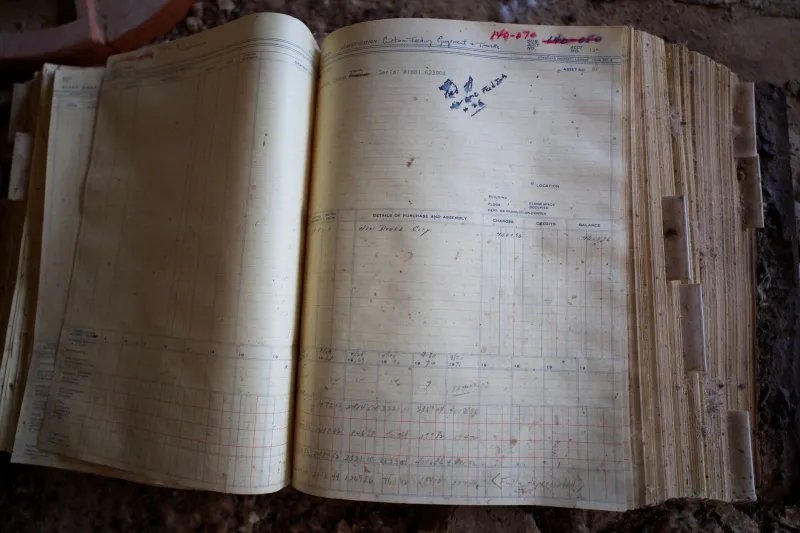
But in a cedar chest near the back, she found a folder of documents relating to her great-grandfather, a man named Elias, who had served on the town's administrative board during the 1930s. The documents included correspondence, meeting minutes, and, at the bottom of the stack, a copy of a 1934 municipal ledger entry.
The entry listed Elias by name as the designated trustee of the town's unclaimed property reserve — a small fund, at the time, holding abandoned bank deposits, uncollected wages, and other dormant assets that state law required municipalities to track. His name appeared in the ledger once, in a column labeled "Responsible Party," next to a dollar figure of roughly $400.
Patricia thought it was interesting. She set it aside. She went back to sorting through the attic.
Several months later, on a whim, she mentioned the document to a friend who worked in estate law. The friend went quiet for a moment and then asked if she could see a copy.
The Law That Time Forgot to Update
Maine's unclaimed property statutes — like those of most states — have a long and convoluted history. The basic framework requires that dormant assets be held by a designated party until claimed by their rightful owners or escheated to the state. In the 1930s, the administrative machinery for handling these funds was considerably less standardized than it is today, and individual municipalities often designated local officials as trustees by name rather than by office.
The critical detail, the one that made Patricia's attic discovery more than a historical curiosity, was this: in Ellsworth's case, the 1934 ledger entry had never been formally superseded. Subsequent municipal reorganizations had shuffled responsibilities around, but no one had ever gone back and struck Elias's name from the original trustee designation. Under the technical reading of state law, the responsibility for that fund — and everything it had grown into over the intervening decades — remained attached to the named trustee or, in the absence of the named trustee, their legal heirs.
Elias had died in 1961. His wife had predeceased him. Their only child, Patricia's grandmother, had inherited his estate. Patricia had inherited her grandmother's estate. Which meant, on paper, that Patricia had inherited a trusteeship over a municipal fund that now held, after decades of dormant account accumulations, somewhere in the neighborhood of $480,000.
The Money She Owned and Couldn't Spend
The legal situation that followed Patricia's discovery was, by the account of every attorney involved, genuinely unprecedented in Maine and possibly in the country.
The funds were real. The state's own records confirmed their existence. The trusteeship designation was real — the 1934 ledger had been preserved in municipal archives and matched the document Patricia had found in the cedar chest. State law was clear that the designated trustee held a fiduciary responsibility for the assets.
But the funds were also unclaimed property, which meant they were legally held in trust for potential claimants — individuals or their heirs who might one day come forward to collect an abandoned account from 1952, or a forgotten deposit from 1967. Patricia could not spend the money. She could not invest it for personal gain. She could not dissolve the trust without a court order. She was, in the most precise legal sense, responsible for nearly half a million dollars that was not hers.
She was also, her attorneys noted, technically liable for the fund's administration. If the money were mismanaged, she could be held accountable. If a legitimate claimant came forward and the funds were insufficient, the shortfall could theoretically be pursued against her personally.
She was a middle school art teacher. She had a mortgage.
Untangling the Knot
The resolution, when it came, took the better part of three years and involved the Maine state treasurer's office, two separate circuit court hearings, and a legislative clarification that was quietly added to the state's unclaimed property statute in 2015. The clarification — drafted specifically in response to Patricia's case, though it was written in sufficiently general language to apply broadly — established that trustee designations made before 1950 by name rather than by office were void upon the death of the named individual and could not pass to heirs.
Patricia was formally released from the trusteeship. The funds were transferred to the state's general unclaimed property pool, where they remain available to legitimate claimants.
She kept the original ledger document. She has it framed in her living room, her attorneys say — a piece of paper that briefly made her responsible for nearly half a million dollars and gave her three of the most stressful years of her adult life.
The town of Ellsworth, for its part, has no official comment on the matter. The municipal archivist who helped locate the original records retired shortly after the case concluded.
Somewhere in Maine, there are people who are rightful heirs to dormant accounts opened before most of their parents were born. The money is sitting there, waiting. All it took to find it was a cedar chest, a curious woman, and a clerk in 1934 who wrote one name in one column and never looked back.