One Transposed Letter in a 1991 Wildlife Memo Gave Squirrels Legal Armor Across Seven States
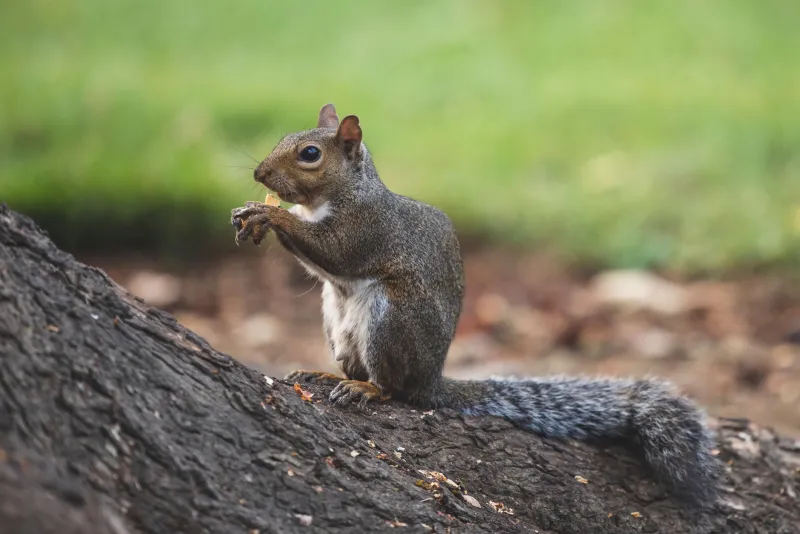
Squirrels are many things. Industrious. Occasionally infuriating. Responsible for more power outages annually than most weather events. What they are not — by any reasonable measure — is endangered.
And yet, thanks to a single transposed letter in a 1991 federal wildlife coordination document, squirrels in seven states have spent the better part of three decades wrapped in the same protective language typically reserved for species teetering on the edge of extinction. Nobody planned it that way. Nobody caught it in time. And in one of the more remarkable examples of bureaucratic inertia in modern American wildlife law, nobody has fully fixed it since.
How One Letter Broke Seven State Wildlife Codes
The error traces back to a routine interagency wildlife coordination memo circulated in the spring of 1991, produced as part of a broader effort to align state-level wildlife protection language with updated federal guidelines under the Endangered Species Act framework. The document was long, dense, and — as these things tend to be — read carefully by almost nobody.
Somewhere in the species classification appendix, a typist transposed two letters in a Latin species designation. The intended entry referenced a specific subspecies of ground-nesting bird native to the mid-Atlantic region. The resulting entry, after the transposition, mapped instead to Sciuridae — the biological family that encompasses squirrels. Eastern gray squirrels. Fox squirrels. Red squirrels. The whole chattering lot of them.
Because the memo was used as a template document by state wildlife agencies in Alabama, Arkansas, Georgia, Kentucky, Mississippi, Tennessee, and West Virginia when drafting or updating their own administrative codes that year, the error propagated outward like a slow-moving ink stain. Each state incorporated the language into their own regulatory frameworks. Each assumed the federal template was accurate. None of them independently verified the Latin classification against a reference taxonomy.
By the time anyone noticed something was off, the language had been codified into administrative rule in all seven states.
The Pest Control Industry Noticed First
The practical consequences didn't surface immediately. For the first several years, the misclassification sat quietly in the administrative code, a legal time bomb that nobody had reason to detonate. Squirrels, after all, were still being trapped and relocated and generally treated as the nuisance animals they are.
The trouble started in the mid-1990s, when a pest control company in Tennessee received a cease-and-desist letter from a state wildlife officer citing the administrative code language during a commercial squirrel removal job at a Knoxville office complex. The officer wasn't being overzealous — he was, technically, reading the code correctly. Under the language as written, the removal of squirrels without a specific state-issued depredation permit potentially violated wildlife protection statutes.
The company pushed back. A local attorney dug into the code. And that's when the transposition error was first formally identified and documented.
What followed was not, as you might expect, a swift correction. It was a multi-year administrative argument about who had the authority to correct the error, whether a correction required a full rulemaking process, and — critically — whether any of the seven states wanted to be the first to formally acknowledge they'd been operating under a typo for the better part of a decade.
The Bureaucratic Knot Nobody Wants to Untangle
Fixing a codified administrative error sounds simple. In practice, it is anything but. Each of the seven affected states would need to independently initiate a formal amendment process for their wildlife administrative codes — a procedure that typically involves public notice periods, comment windows, agency review, and in some cases legislative sign-off. The federal agency that originated the memo has, over the years, issued clarifying guidance letters acknowledging the error, but clarifying guidance doesn't automatically override codified state administrative language.
There's also a quieter political dimension. In at least three of the seven states, wildlife advocacy groups have — somewhat improbably — organized around the existing language, arguing that whatever the original intent, the squirrel classification has had measurable conservation benefits for certain squirrel subspecies that genuinely are under population pressure. Changing the code, they argue, would remove protections that have been in place long enough to matter.
Pest control industry associations have lobbied periodically for correction. State wildlife agencies have acknowledged the problem in internal communications. And the squirrels, for their part, have continued to chew through attic insulation and raid bird feeders with the complete indifference of animals that have no idea they're technically protected wildlife.
Thirty-Plus Years and Counting
As of the most recent review of state administrative codes, the classification language remains on the books in at least five of the original seven states in some form, though enforcement has been inconsistent and largely dependent on individual officer interpretation. The depredation permit system that grew up around the error has, in some counties, become a minor revenue stream — homeowners in certain jurisdictions technically need a permit to trap and relocate squirrels from their own property.
Most don't know that. Most pest control operators work around it. Most wildlife officers exercise discretion.
But the legal exposure is real, and occasionally someone finds out about it the hard way.
The story is, at its core, a masterclass in how bureaucratic systems amplify small errors into durable realities. One typist, one moment of inattention, one Latin suffix transposed — and seven states spent three decades legally obligated to treat backyard squirrels like they were spotted owls.
The squirrels, one imagines, would be smug about this if they knew. They absolutely would be.