A Single Misplaced Clause in a 1976 Law Almost Gave Away Every Christmas Carol You've Ever Heard
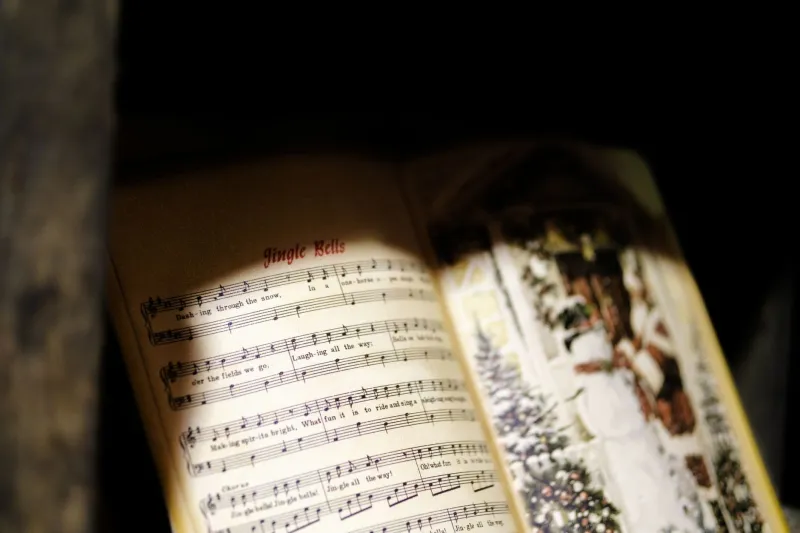
The Quietest Panic in Music Industry History
Somewhere in a midtown Manhattan law office in the first weeks of 2024, a copyright attorney named — well, she hasn't been named publicly, and for reasons that will become obvious, she probably prefers it that way — was doing what copyright attorneys do: reading very old, very dense federal legislation and looking for problems.
She found one. A significant one. The kind that, if it had gone unaddressed, would have effectively handed the public a free license to record, perform, and distribute some of the most commercially valuable songs in the American catalog. Songs you hear in every grocery store from Thanksgiving through New Year's. Songs that generate hundreds of millions of dollars in licensing fees every single year.
The problem had been sitting in the Copyright Act of 1976 for nearly fifty years. And nobody had noticed.
A Little Background on Copyright Law (Bear With Us)
The Copyright Act of 1976 is the foundational federal law governing intellectual property in the United States. It replaced a patchwork of earlier statutes and established the modern framework: copyright protection lasts for the life of the creator plus a set number of years, after which works enter the public domain and become freely available to everyone.
The Act also included transition provisions — rules for handling works created before the law took effect. These provisions were complicated, because they had to reconcile decades of prior copyright registrations, renewals, and expirations under the old system with the new one. The legislative language in these sections is, to put it charitably, dense. To put it uncharitably, it reads like it was written by a committee that had been arguing for six hours and just wanted to go home.
One particular subsection dealt with works that had been registered under the old system but had not yet had their copyrights formally renewed under the new framework. The intent, as far as anyone could tell from the legislative history, was to give rights holders a grace period to bring their registrations into compliance.
The actual language, however, was something else.
What the Clause Actually Said
The subsection in question contained a phrase that, depending on how you read it, could be interpreted to mean that works falling into a specific registration category — works first registered between particular years, renewed under a specific provision of the prior law, and not subsequently re-registered under the 1976 Act's new framework — would be considered to have entered the public domain at the start of the calendar year in which the ambiguity was formally identified.
This is the kind of sentence that makes copyright lawyers sit up very straight.
Because if that reading was correct, and if the attorney's analysis of which songs fell into that registration category was accurate, then a window had technically opened on January 1, 2024 — and a substantial list of holiday standards had, for a brief and legally murky period, belonged to everyone.
The list allegedly included songs that are essentially synonymous with the American Christmas experience. Not the genuinely old carols — those have been public domain for over a century. The mid-twentieth century ones. The ones with orchestral arrangements and crooner vocals and enough nostalgia attached to them to power a small city.
The Scramble Nobody Talked About
What happened next moved fast and quietly, which is unusual for an industry not known for either quality.
Within days of the attorney's analysis being circulated among a small group of senior publishing executives, legal teams at several major music rights holders had independently confirmed the reading. The clause was genuinely ambiguous. A competent federal judge could reasonably rule either way.
The solution, such as it was, involved a combination of emergency re-registration filings, a formal request to the U.S. Copyright Office for a clarifying interpretation, and — according to sources who described the situation to music industry trade publications in the months that followed — some very tense phone calls between publishing executives and their congressional contacts.
The Copyright Office issued a clarifying guidance document in March 2024. It concluded, with the kind of careful bureaucratic language designed to make a problem disappear without acknowledging it existed, that the subsection in question should be read in light of the Act's "broader legislative intent" and that no works should be considered to have entered the public domain as a result of the ambiguous clause.
The window, officially, had never been open.
Why It Matters That It Almost Was
The episode is a reminder of something the music industry would rather not advertise: the legal architecture protecting some of the most valuable intellectual property in the world is, in places, surprisingly fragile. Copyright law is old, layered, and full of transition provisions that were written hastily and never revisited.
The 1976 Act has been amended multiple times since its passage, but the core transition language has largely survived intact. Legal scholars who have written about the 2024 incident note that the clause in question was flagged as potentially ambiguous in at least two law review articles published in the 1990s. Nobody acted on it then.
For a few weeks at the start of 2024, the songs you've heard ten thousand times in department stores and holiday movies were, by one reasonable legal reading, free. Free to record, free to perform, free to use in a commercial or a school play or a low-budget holiday film without paying a cent to anyone.
Then a lawyer noticed. The clause was clarified. The fees were restored.
The carols played on.