Faster Than You'd Think: The Day Boston Drowned in Two Million Gallons of Molasses
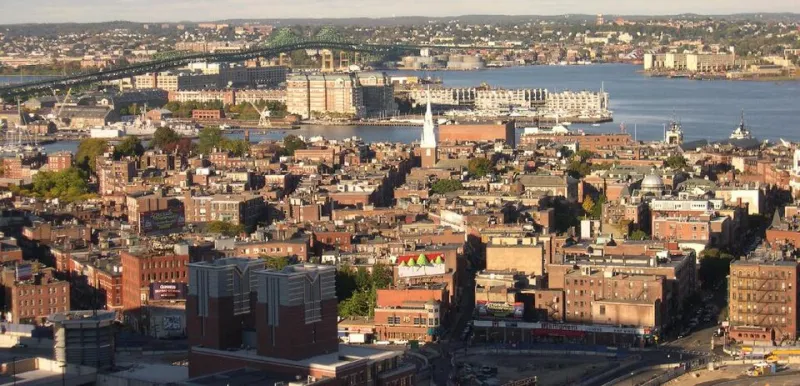
Photo: Sfoskett at English Wikipedia, CC BY-SA 3.0, via Wikimedia Commons
Faster Than You'd Think: The Day Boston Drowned in Two Million Gallons of Molasses
There's a phrase — slow as molasses in January — that Americans have used for generations to describe anything that moves with maddening, glacial indifference. It's the kind of expression that feels self-evident. Molasses is thick. January is cold. Obviously it moves slowly.
On January 15, 1919, Boston's North End made a permanent, catastrophic argument against that assumption.
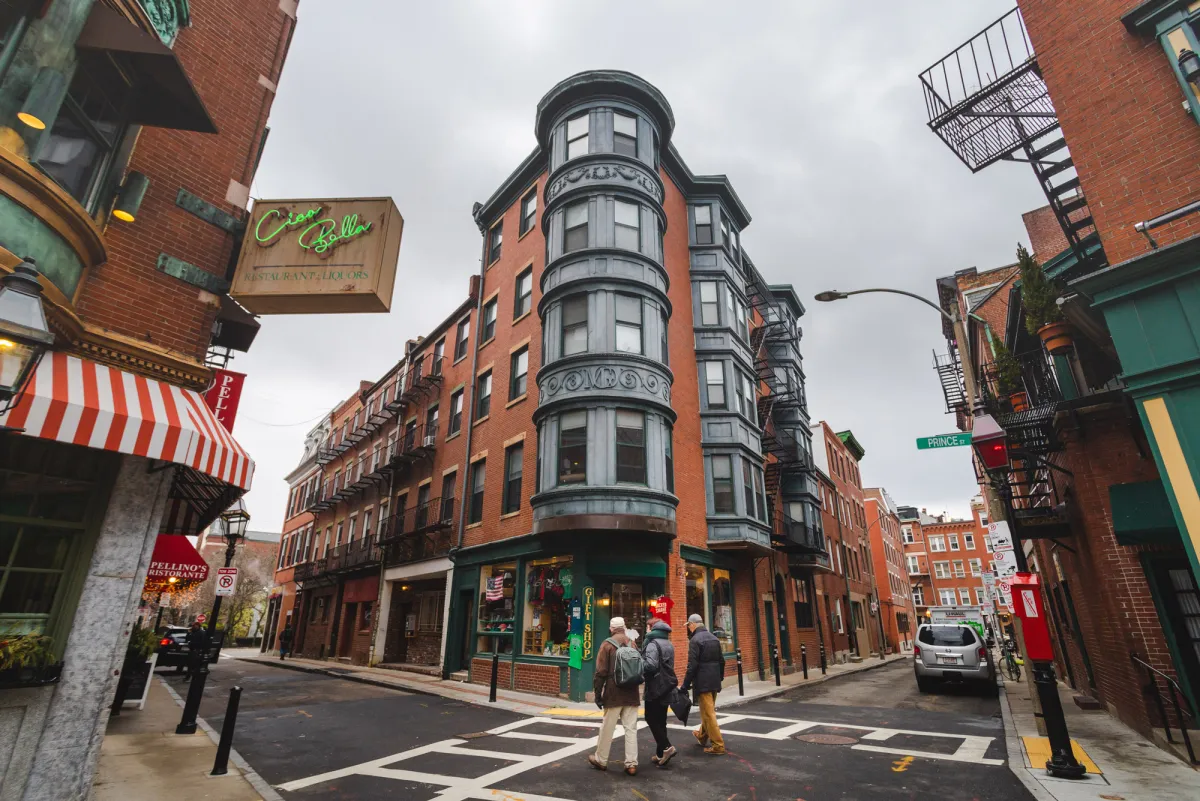 Photo: Boston's North End, via www.bu.edu
The Tank That Should Have Worried Everyone
The Purity Distilling Company had erected a massive steel storage tank on Commercial Street in 1915. It stood 50 feet tall, measured 90 feet across, and held up to 2.3 million gallons of crude molasses — the raw material used to produce industrial alcohol, which was in extremely high demand during World War I for manufacturing munitions.
From the moment it was built, the tank was trouble. Neighbors reported that it groaned and sweated, leaving sticky brown streaks down its sides that local children reportedly scraped off and ate. Workers noticed the seams leaked. The company responded by painting the tank brown — apparently on the theory that if you can't see the molasses seeping out, it isn't really seeping out.
Engineers later determined the tank had been structurally inadequate from the start. Its walls were too thin. Its steel was improperly tested. It had been rushed into service to meet wartime production demands without the kind of rigorous inspection that might have caught the problem before it became a catastrophe.
For four years, the tank held. Barely.
12:30 PM, January 15th
The weather that day was unusually warm for mid-January in Boston — temperatures had climbed into the low 40s after a cold snap, and a fresh shipment of molasses had recently arrived from Puerto Rico, raising the tank's internal pressure.
At approximately 12:30 in the afternoon, the tank gave way.
The sound was described by witnesses as a low, deep rumble, followed immediately by a sound like machine gun fire as the rivets holding the steel plates together shot outward like bullets. The tank didn't spring a leak. It didn't develop a crack. It exploded — the entire structure collapsing outward and releasing its full contents in a matter of seconds.
What followed was not a slow, sticky inconvenience. It was a wave.
The Wave
The initial surge of molasses rose an estimated 25 feet high and spread outward at speeds that witnesses and later investigators measured at up to 35 miles per hour. That's faster than most people can sprint. It was fast enough to knock buildings off their foundations. Fast enough to pick up a loaded freight car and carry it sideways. Fast enough that people working in the immediate area had no meaningful chance to run.
The wave demolished a section of the Boston Elevated Railway structure. It collapsed the nearby firehouse, trapping firefighters inside. It swept through the streets of the North End — one of Boston's most densely populated neighborhoods — swallowing horses, wagons, and people indiscriminately.
Twenty-one people were killed. Another 150 were injured. Several victims were found buried under debris, suffocated by the thick syrup that had poured into every available space around them. Horses trapped in the molasses couldn't free themselves from its grip, and police officers made the grim decision to shoot the animals where they stood rather than let them struggle.
The cleanup took weeks. The harbor ran brown for months. Boston firefighters used salt water hoses to break down the molasses coating every surface, but the substance had worked its way into the cobblestones, the wood, the structural materials of the surrounding buildings.
The Aftermath Nobody Expected
The lawsuit that followed the disaster was, at the time, one of the largest and most complex legal proceedings in Massachusetts history. The United States Industrial Alcohol Company, which owned Purity Distilling, initially tried to blame anarchists — claiming that the tank had been sabotaged by activists upset about the wartime political climate. It was 1919, and the Red Scare was in full bloom, making the accusation seem at least plausible to some.
It didn't hold up. A court-appointed auditor spent three years reviewing the evidence and concluded that the tank had simply been built wrong, maintained poorly, and filled beyond its safe capacity. The company was ordered to pay out roughly $600,000 in settlements — approximately $10 million in today's money — to victims and their families.
It was one of the first major cases in American legal history where a corporation was held directly liable for industrial negligence on this scale.
The Smell That Wouldn't Leave
For decades after the flood, longtime North End residents maintained that on particularly hot summer afternoons, you could still detect a faint sweetness in the air around Commercial Street. Scientists and historians have largely attributed this to psychological association — the event was so traumatic and so deeply embedded in neighborhood memory that the mind supplied the sensation even when the chemistry no longer could.
But some old-timers insisted it was real. That the molasses had soaked so deeply into the ground, the wood, the very bones of the neighborhood, that it never fully left.
Boston has had its share of disasters. But only one of them smelled like dessert.