He Filed a Deed for the Moon, Sold Plots to Three Presidents, and Nobody Has Stopped Him Yet
The Loophole That Was Literally Out of This World
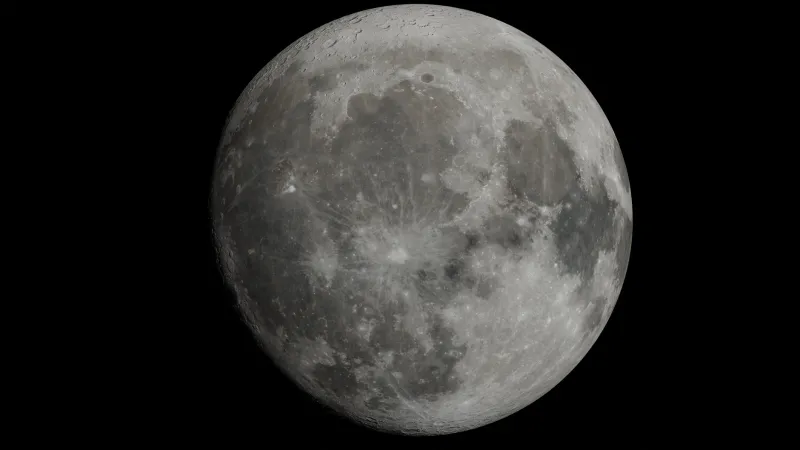
Let's be clear about something upfront: Dennis Hope owns the Moon. Or at least, he owns it as much as anyone does — which, depending on how you read a 1967 United Nations treaty, might actually be a lot.
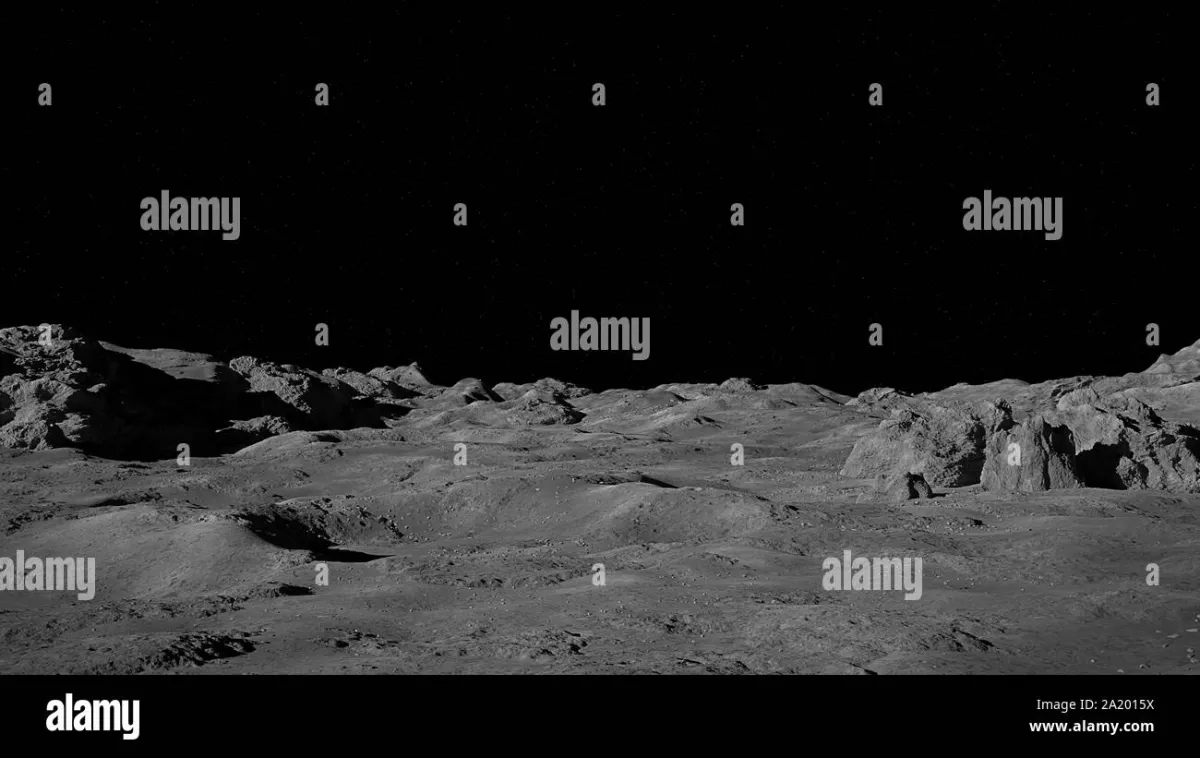 Photo: the Moon, via c8.alamy.com
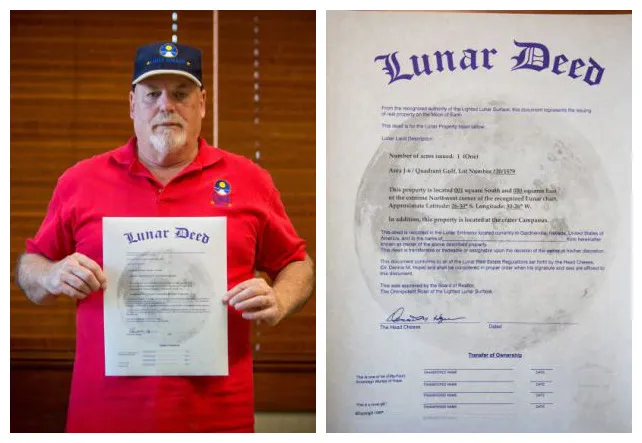 Photo: Dennis Hope, via i0.wp.com
Hope wasn't a lawyer, an astronaut, or a billionaire with a rocket fetish. In 1980, he was a struggling Nevada man looking for a fresh start. He was broke, newly divorced, and trying to figure out what came next. What came next, apparently, was interplanetary real estate.
The story goes that he was staring at a globe one day — the regular Earth kind — when a thought occurred to him. Nobody owned the Moon. Not really. So he went to the library and looked it up.
What the Treaty Actually Says
The document at the center of all this is the 1967 Outer Space Treaty, which was signed by the United States, the Soviet Union, and dozens of other nations during the height of the Space Race. The treaty was designed to prevent any single country from planting a flag on the Moon and claiming it as sovereign territory. It explicitly prohibited nations from owning celestial bodies.
But here's the thing — and this is the part that should make every international law professor either laugh or cry — the treaty said nothing about individuals.
Hope spotted that gap. Nations couldn't own the Moon. But the treaty never got around to mentioning private citizens. It was like writing a lease agreement that covered every possible tenant except the one guy who actually shows up.
So Hope did what any reasonable person would do in this situation. He filed a formal declaration of ownership.
The Most Audacious Piece of Paperwork Ever Submitted
In 1980, Hope sent a letter to the United Nations, the United States government, and the Soviet Union. The letter explained, politely but firmly, that he was claiming ownership of the Moon and all other planetary bodies in the solar system not already claimed by existing governments. He noted the loophole. He invited any of the three parties to respond with a legal objection.
None of them did.
No reply came from Washington. No response from Moscow. The UN filed it away somewhere and presumably moved on to other business. Hope took their silence as consent — which, in many legal frameworks, it effectively is.
He then filed a deed with the county recorder's office in San Francisco. The Moon was now, on paper at least, the property of Dennis Hope.
The Lunar Embassy Is Open for Business
Hope didn't just sit on his celestial acquisition. He monetized it. He founded the Lunar Embassy, a company dedicated to selling plots of lunar real estate to the general public. Prices started around $20 an acre — cheaper than most parking lots in Manhattan — and the business took off in ways that are genuinely difficult to explain without using the word "absurd."
By the time reporters started paying serious attention to the operation, Hope had sold lunar property to over six million people across more than 180 countries. His customer list reportedly included three sitting or former US presidents, multiple Hollywood celebrities, and more than 250 sitting members of Congress at various points. Whether those purchases were made as novelty gifts or genuine speculative investments is a question only the buyers can answer.
Hope expanded his portfolio over the years. He began selling plots on Mars, Venus, and Io — one of Jupiter's moons. He published a Lunar Constitution. He even floated the idea of a lunar government, with himself as head of state.
The Legal Status of All This Is Still, Technically, Unresolved
Here's what makes this story genuinely strange rather than just a quirky bit of trivia: nobody has ever definitively proven Hope wrong.
Legal scholars have argued for decades about whether the Outer Space Treaty's prohibition on national ownership implicitly extends to individuals, or whether that silence represents a genuine gap. Some experts argue the spirit of the law clearly covers private parties. Others point out that the spirit of the law and the text of the law are two different things, and courts tend to care about the text.
The United States government has never issued a formal ruling declaring Hope's deeds invalid. The UN has never passed a resolution specifically addressing private lunar ownership. As commercial space companies like SpaceX and Blue Origin have pushed deeper into conversations about mining asteroids and establishing off-world operations, the question of who owns what in space has gone from being a fun thought experiment to a genuinely pressing policy problem.
In 2015, the US passed the Commercial Space Launch Competitiveness Act, which allowed American citizens to own resources they extract from celestial bodies — a law that added another layer of complexity without fully resolving the ownership question.
The Sea of Tranquility Has a Landlord
Somewhere in a filing cabinet, there is a deed to the Sea of Tranquility — the flat lunar plain where Apollo 11 touched down in 1969. That deed belongs to Dennis Hope. Whether it's worth anything is a question that international law has spent over four decades carefully avoiding.
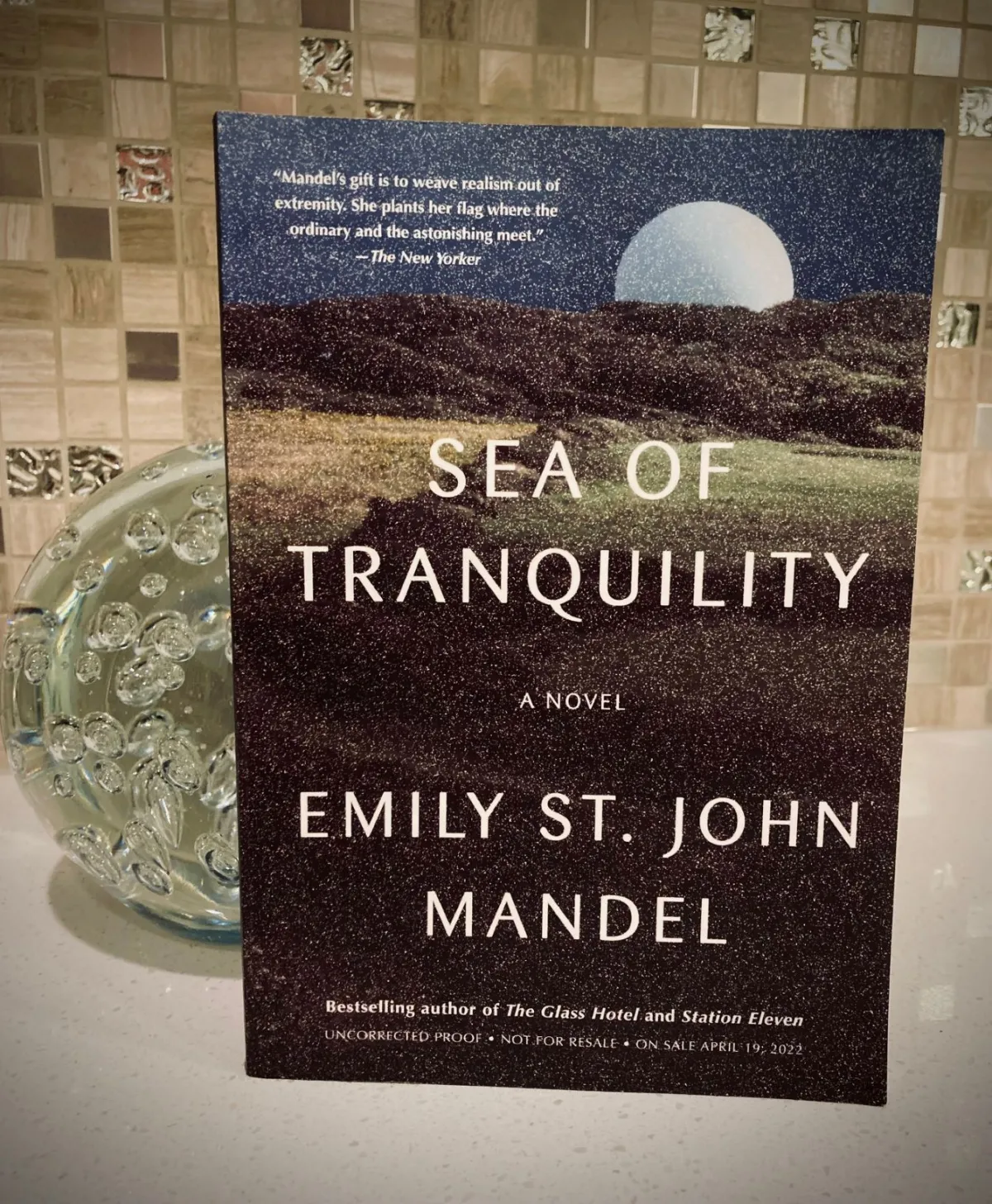 Photo: Sea of Tranquility, via ivereadthis.com
Hope has said in interviews that he fully expects his lunar property rights to be tested if and when humanity actually establishes a permanent presence on the Moon. At that point, he figures, someone will have to deal with the paperwork.
He's probably right. And when that day comes, the most consequential legal battle in human history might hinge on what a broke Nevada man mailed to the United Nations in 1980 — and the fact that nobody ever wrote back.
Some loopholes are small. Dennis Hope found one the size of the Moon.