A Petroleum Company Mistyped Four Numbers in 1947 — and a Kansas Schoolteacher Became Quietly, Inexplicably Rich
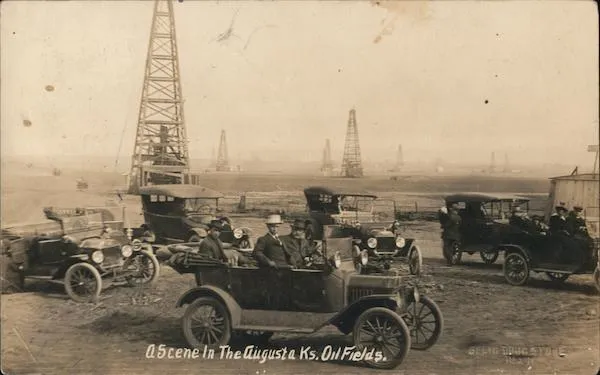
Photo: vintage Kansas farmland oil well 1940s rural, via www.cardcow.com
There is a particular kind of luck that doesn't announce itself. It doesn't arrive with fanfare or obvious signs. Sometimes it looks like a piece of paper with the wrong numbers on it, sitting in a county clerk's filing cabinet, waiting for someone to notice.
For a woman named Dorothy Albrecht of Reno County, Kansas, that piece of paper arrived in the spring of 1947. She didn't ask for it. She didn't know about it. And by the time she understood what it meant, her life had changed so completely that she reportedly sat in her kitchen for a full afternoon before saying a single word.
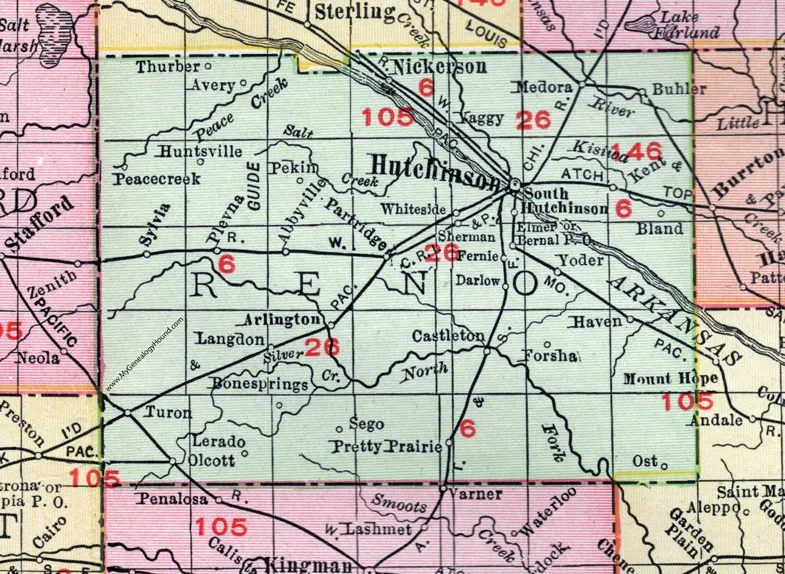 Photo: Reno County, Kansas, via mygenealogyhound.com
Postwar Kansas and the Oil Rush Nobody Talks About
When most Americans think of the postwar oil boom, they picture Texas. But Kansas had been producing petroleum since the 1890s, and by the late 1940s, energy companies were moving aggressively through the central plains, leasing drilling rights on farmland at a pace that generated enormous volumes of paperwork. Legal teams worked fast. Lease agreements were often standardized forms with coordinates filled in by junior clerks referencing hand-drawn county plat maps that varied in quality from passable to genuinely unreliable.
It was, in other words, an environment where mistakes were not just possible but statistically inevitable.
In the summer of 1947, a petroleum company — identified in court records only as a mid-sized regional operator — dispatched a landman to Reno County to secure drilling rights on a particular section of farmland. The target property was owned by a neighboring family and sat over a formation geologists had flagged as promising. The landman did his job. The legal team drafted the lease. And somewhere between the plat map and the typed coordinates, a transcription error shifted the described boundary by just enough to encompass an adjacent parcel.
That parcel belonged to Dorothy Albrecht.
The Widow and the Garden
Albrecht was thirty-nine years old in 1947, recently widowed, and working as an elementary school teacher in the nearby town of Nickerson. She owned a modest farmstead — roughly forty acres — that she had inherited jointly with her late husband. She grew a kitchen garden. She rented the cropland to a neighboring farmer. She had no particular reason to think about what lay beneath it.
The mistyped lease was filed with the county recorder, fees were paid, and the petroleum company began preliminary drilling operations on what they believed was the correct property. It wasn't until a title search several months later — triggered by a financing dispute between the company and its investors — that anyone noticed the coordinates on record described Albrecht's land, not the intended target.
The company's attorneys, recognizing the problem, moved quickly to void the lease and refile on the correct parcel. This is where things became complicated.
The Legal Argument That Changed Everything
Albrecht had been notified of the original lease filing as a matter of routine county procedure. She had signed a standard acknowledgment form without fully understanding what it covered — a common enough occurrence in an era when landmen sometimes presented paperwork as routine formality. When the company's lawyers arrived to explain the error and ask her to sign a rescission agreement, she had already spoken with an attorney of her own.
Her attorney's position was straightforward: the lease had been properly filed, properly acknowledged, and was legally valid. His client had not made the error. His client bore no responsibility for correcting it. And under Kansas mineral rights law as it stood in 1947, a recorded lease conveying subsurface rights was a binding encumbrance on the title — one that gave the leaseholder the right to extract resources and the landowner the right to receive royalties.
The petroleum company sued to void the lease on the grounds of mutual mistake. Albrecht's legal team countered that the mistake was unilateral — hers was not a party who had erred — and that voiding the agreement would set a dangerous precedent allowing companies to escape valid contracts by claiming clerical error after the fact.
The case wound through Kansas district court and, eventually, a state appellate panel. Albrecht won both times.
What the Oil Actually Looked Like
Drilling began on Albrecht's property in 1950. The formation beneath her garden was not the gusher that wildcatters dream about — but it was real, productive, and commercially viable for decades. Royalty payments began arriving quarterly. By the mid-1950s, she had quietly retired from teaching. By the 1960s, she had purchased additional property and established a small educational trust that still operates in Reno County today.
She gave very few interviews. The ones she gave were characteristically understated. In a 1961 piece in the Hutchinson News, she was asked whether she considered herself lucky. She said she considered herself organized — she had kept every piece of paper anyone had ever asked her to sign.
The Precedent That Outlived Her
The Albrecht decisions, while never nationally famous, became quietly influential in Midwestern mineral rights law. They established a clear standard: when a lease error is unilateral and the non-erring party has acted in good faith, the valid filing stands. Energy companies operating in Kansas, Nebraska, Oklahoma, and Missouri subsequently overhauled their lease preparation procedures, adding independent coordinate verification steps that remain standard practice today.
Somewhere in that process, an unknown number of ordinary landowners were spared the experience of accidentally becoming oil royalty recipients. Or, depending on your perspective, denied it.
Four mistyped numbers. One woman who kept her paperwork. The rest, as they say, is mineral rights case law.