
When Good Intentions Meet Bad Paperwork
In 1836, the mayor of Reggio, a sleepy French village with barely 800 residents, thought he was doing something nice. The Italian coastal town of Monterosso had sent a delegation bearing gifts and goodwill, proposing a formal friendship between their communities. What could go wrong with signing a few papers to celebrate international cooperation?
As it turns out, absolutely everything.
The document they signed wasn't just a ceremonial handshake. It was a legally binding international treaty that created mutual civic obligations so complex that lawyers are still discovering new clauses buried in the fine print. And unlike modern sister-city agreements that are mostly symbolic, this 19th-century version was drafted with the kind of legal precision usually reserved for territorial disputes.
The Devil in the Details
The original agreement, written in a mixture of French and Latin that would make medieval scribes proud, contained provisions that nobody bothered to read carefully at the time. Buried in Article VII was a clause requiring each town to provide housing and sustenance for the other's citizens during times of war or natural disaster. Article XII established shared fishing rights in any body of water that touched both territories—which sounds reasonable until you realize one town is landlocked.
But the real kicker was Article XV, which created what legal scholars now call "reciprocal civic jurisdiction." In plain English, this meant that citizens of either town could theoretically claim legal residence in both places simultaneously, with all the voting rights, tax obligations, and municipal benefits that entailed.
When History Comes Calling
For over a century, these obligations remained dormant curiosities gathering dust in municipal archives. Then World War II happened, and suddenly Article VII wasn't just historical trivia anymore.
In 1943, as Allied forces pushed through Italy, a group of displaced Monterosso residents actually showed up in Reggio demanding the housing guaranteed by their 107-year-old treaty. The French mayor, who had inherited both the position and the paperwork from his grandfather, found himself legally obligated to provide shelter to Italian strangers based on a document he'd never read.
The French government quietly honored the arrangement rather than risk an international incident, but bureaucrats in Paris began taking a much closer look at what other municipal time bombs might be ticking away in provincial filing cabinets.
The American Connection
Here's where things get interesting for Americans: the same legal framework that created the Reggio-Monterosso mess was exported to the United States during the sister-city movement of the 1950s. President Eisenhower enthusiastically promoted international municipal partnerships as a form of citizen diplomacy, and dozens of American towns signed agreements with foreign counterparts.
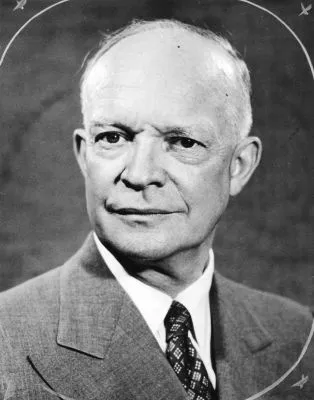 Photo: President Eisenhower, via s-media-cache-ak0.pinimg.com
Many of these agreements were based on European templates—including some that traced their legal language directly back to the 1836 Reggio document. Legal experts now estimate that at least forty American municipalities may have inadvertently committed themselves to housing obligations, reciprocal fishing rights, or other dormant treaty provisions that nobody has bothered to examine in decades.
Still Married After All These Years
The Reggio-Monterosso agreement remains technically valid today, despite multiple attempts by both towns to quietly dissolve it. In 1987, lawyers from both municipalities spent three years trying to draft a termination document, only to discover that the original treaty contained no exit clause. Under international law, they're stuck with each other until both parties can agree on terms—and Monterosso has consistently refused to give up the theoretical housing rights that proved so useful during the war.
The situation has created a bizarre ongoing legal relationship between two communities that have almost nothing in common beyond a shared commitment to a piece of paper their ancestors signed before the invention of the telegraph.
The Lesson Nobody Learned
The Reggio-Monterosso case should have served as a warning about the dangers of ceremonial documents with real legal teeth. Instead, it became a template for international municipal cooperation that spread across Europe and eventually to America.
Today, municipal lawyers occasionally discover sister-city agreements containing provisions that would make their mayors break out in cold sweats: shared liability for municipal debts, reciprocal law enforcement jurisdiction, or mutual guarantees for infrastructure projects that nobody remembers authorizing.
The next time your town announces a cheerful new partnership with some charming foreign municipality, you might want to ask if anyone has actually read the fine print. Because somewhere in France, a village is still technically married to Italy, and divorce papers have been pending for over 180 years.