He Cashed a Stranger's Dividend Check in 1956 — and Then Just Kept Doing It for Four Decades
There is a version of the American Dream where you work hard, save carefully, and build something over a lifetime. Then there is the version where a mail carrier delivers the wrong envelope to a row house in Scranton, Pennsylvania, and you just sort of go with it.
This is that version.
A Check With the Wrong Name — Almost
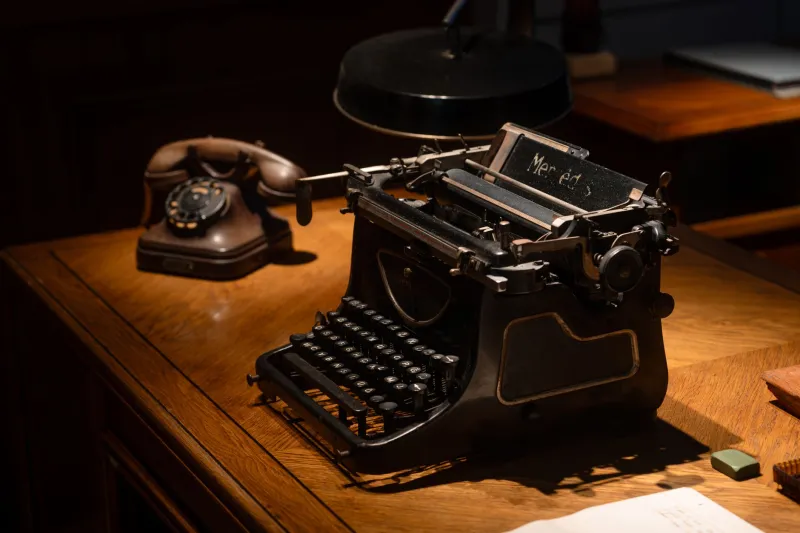
In the spring of 1956, a typewriter repair technician named Harold Busick received a dividend check from a mid-sized manufacturing company in the mail. The check was modest — somewhere in the range of $11, according to the accounts that would later surface — and it was made out to a "H. Busick." Harold's last name was Busick. One letter off. Close enough that he didn't immediately dismiss it. Close enough, apparently, that his bank didn't either.
Harold cashed it.
Now, the charitable interpretation is that Harold genuinely believed the check was his — a clerical error on the company's end, a transposed letter that was their problem, not his. The less charitable interpretation is that Harold knew exactly what had happened and decided $11 was $11. Either way, what followed was one of the more quietly remarkable financial stories of the postwar era.
The Machine That Nobody Turned Off
The manufacturing company — a mid-tier industrial supplier based in western Pennsylvania — had Harold's corrected address on file because the original check had been returned once before, then re-routed. When the re-routed check landed with Harold and he cashed it, the company's accounting department noted the transaction, updated their records with his address, and moved on. In their ledger, H. Busick and Harold Busick had become the same person.
This was 1956. There were no computers cross-referencing shareholder names against Social Security numbers. There were no automated flags for suspiciously similar account names. There was a ledger, a clerk, and the reasonable assumption that if a check cleared, the right person had received it.
The dividends kept coming. Harold kept cashing them.
When the company's stock split in 1961, Harold's phantom holdings doubled. When the company was acquired in 1968 and shareholders received a cash-and-stock payout, Harold received his portion. He reinvested it — quietly, methodically, through a brokerage account he opened in Scranton — and the whole thing just kept growing.
Forty Years of Compound Silence
What makes this story genuinely astonishing isn't the initial mistake. Mistakes happen. What's remarkable is the duration. For roughly four decades, not one audit, not one shareholder reconciliation, not one letter from the actual H. Busick — a Herbert Busick of Allentown, Pennsylvania, who apparently never owned stock in the company and therefore never noticed missing dividends — interrupted the arrangement.
Harold, for his part, kept meticulous records. When his estate was examined after his death in 1998, his family discovered brokerage statements dating back to the late 1950s, carefully organized in manila folders inside a fireproof lockbox. The portfolio, by that point, was worth somewhere north of $800,000 — a figure that had grown from an $11 dividend check through a combination of reinvestment, stock splits, and the long bull market of the 1980s and '90s.
His children had no idea where the money had come from. Harold had told them he'd made some smart investments over the years. He had not mentioned the part about the wrong envelope.
What the Law Says — and Doesn't Say
The legal territory here is genuinely murky. Knowingly cashing a check made out to another person is fraud. But Harold's case rested on the ambiguity of that single transposed letter and the fact that the company's own records had reconciled the error in his favor. No court ever examined the question, because no one ever brought a case.
The original H. Busick — Herbert — died in 1979 without ever filing a claim or apparently noticing any discrepancy. The manufacturing company dissolved in a merger in 1991. By the time Harold passed away, there was no institutional memory of the original error and no surviving party with standing to contest it.
His estate passed to his children without incident.
The Pre-Digital Lottery Nobody Talks About
Financial historians who have examined similar cases from the mid-20th century describe them as artifacts of what one researcher called "the paper chaos era" — a period when the sheer volume of physical documentation required to run American commerce meant that small errors could calcify into permanent records before anyone noticed.
The postwar economic boom generated millions of new shareholders, new accounts, and new transactions every year. Brokerage houses and corporate accounting departments were overwhelmed. A miskeyed name here, a transposed digit there — these weren't just harmless clerical quirks. In the right circumstances, they were the starting gun for something much stranger.
Harold Busick of Scranton, Pennsylvania, just happened to be standing at the finish line.
He never spoke publicly about the money. His neighbors remembered him as a quiet man who fixed typewriters and kept a tidy yard. Nothing about his life suggested unusual wealth. He drove a used Buick. He ate lunch at the same diner on Lackawanna Avenue for thirty years.
And somewhere in a fireproof lockbox in his spare bedroom, forty years of someone else's dividends sat quietly compounding — one of the more improbable fortunes in American financial history, built entirely on a single misdelivered envelope and a decision that took about thirty seconds to make.