The Town That Races Invisible Horses Every Year
When Make-Believe Becomes Community Gospel
Every first Saturday in May, while the rest of Kentucky focuses on the "real" Kentucky Derby in Louisville, the tiny town of Falmouth (population 2,100) hosts its own version of the most famous horse race in America. They have announcers calling the race, spectators cheering from packed grandstands, betting windows, and a winner's circle ceremony complete with roses and champagne.
There's just one small detail that makes this event completely absurd: there are no horses.
The Birth of an Impossible Tradition
The Falmouth Derby began in 1972 as what locals thought would be a one-time fundraising gimmick for the volunteer fire department. The town was too small and too poor to host actual horse racing, but somebody had the brilliant idea to hold all the pageantry of a derby without the expensive part—the horses.
Local businessman Jim Williams suggested they could recreate the excitement of horse racing using nothing but dice, imagination, and theatrical flair. What started as a joke to raise a few hundred dollars for new fire equipment has become a 50-year institution that draws visitors from across the region.
How to Race Horses That Don't Exist
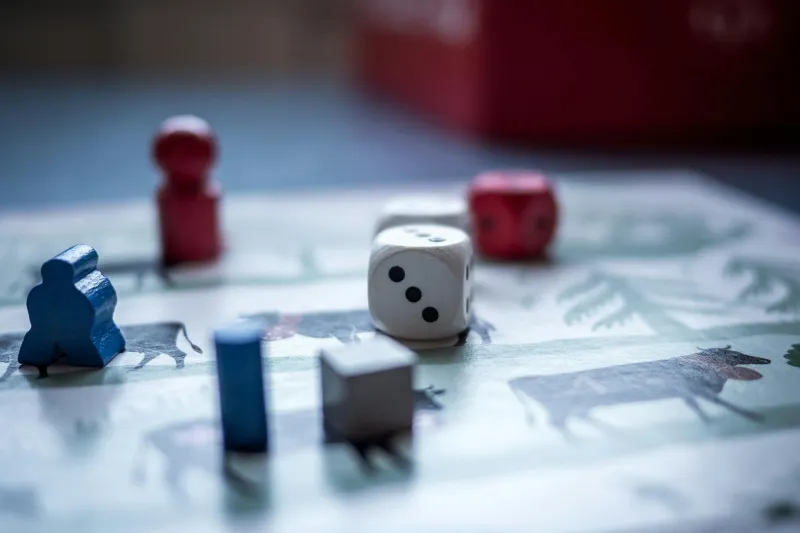
The mechanics of the Falmouth Derby are beautifully simple and completely ridiculous. Twelve "horses" (represented by colorful wooden tokens) line up at a starting gate painted on a large board. Each horse has a creative name that changes yearly—past winners have included "Dice Are Wild," "Imaginary Friend," and "No Horse Sense."
The race unfolds through dice rolls, with each horse advancing based on the numbers thrown. A professional announcer provides play-by-play commentary as dramatic as anything you'd hear at Churchill Downs, complete with detailed descriptions of horses that exist only in everyone's collective imagination.
"And down the backstretch, Invisible Thunder is making his move on the outside while Phantom Fury holds the lead!" the announcer might call, as dice determine the fate of wooden tokens sliding along painted tracks.
Serious Business in an Absurd Package
What makes the Falmouth Derby genuinely remarkable is how seriously the community takes this obviously fake event. Local businesses sponsor horses, complete with official racing silks designed and displayed. The winner's circle ceremony includes an actual blanket of roses, a trophy presentation, and interviews with the "winning jockey" (usually a local volunteer who plays the role).
Betting is real—spectators can place actual money on their favorite non-existent horses, with proceeds supporting community projects. The odds are calculated and posted just like a real track, and people study the "horses'" past performance records (which are, of course, completely made up but meticulously maintained).
A Multi-Generational Commitment to Fantasy
Perhaps most remarkably, multiple generations of Falmouth families have now grown up treating the fake derby as an authentic community tradition. Children who attended as toddlers now bring their own kids, maintaining the elaborate fiction with complete sincerity.
Local historian Mary Beth Wilson explains that families plan their entire year around Derby Day, with some traveling from other states to attend. "My grandmother started coming in 1975," says longtime attendee Sarah Mitchell. "She taught me which horses to bet on based on their names and colors. I know it's not real, but it feels real when the whole town believes in it."
The Economics of Imaginary Competition
Over five decades, the Falmouth Derby has raised hundreds of thousands of dollars for local causes while costing virtually nothing to operate. The "track" is painted plywood, the "horses" are wooden tokens, and the entire production runs on volunteer labor and community enthusiasm.
This economic model has allowed the tiny town to fund everything from playground equipment to senior center renovations through an event that exists purely in the realm of shared imagination. It's possibly the most cost-effective sporting event in American history.
Cultural Phenomenon or Elaborate Inside Joke?
The Falmouth Derby occupies a unique space in American culture—it's simultaneously a parody of horse racing and a genuine community celebration. Visitors often arrive expecting to find a tongue-in-cheek event, only to discover that locals approach it with the same reverence other Kentucky communities reserve for actual horse racing.
The event has been featured in national media outlets, with journalists consistently amazed by the community's commitment to maintaining the elaborate fiction. Yet residents insist it's not a joke—it's their derby, and the fact that the horses are imaginary doesn't make the tradition any less meaningful.
The Philosophy of Fictional Sports
What the Falmouth Derby ultimately demonstrates is that community events don't need to be "real" to create real connections and real impact. The shared experience of cheering for imaginary horses has built friendships, funded community projects, and created memories that span generations.
In an era when authentic community traditions are increasingly rare, Falmouth has accidentally proven that sometimes the best way to build something real is to start with something completely fake.
More Real Than Reality
After 50 years, the Falmouth Derby has achieved something that many actual sporting events struggle with: it has become irreplaceable to its community. The wooden horses may not exist, but the tradition they represent has become more durable than many "real" racing venues that have closed due to economic pressures.
Every May, when the dice roll and the crowd cheers for horses that exist only in their collective imagination, Falmouth proves that sometimes the most meaningful competitions are the ones we create entirely in our minds—and then choose to believe in together.