The Scammer Who Sold America's Most Famous Landmarks So Often Police Named a Crime After His Victims
The Man Who Owned Everything (On Paper)
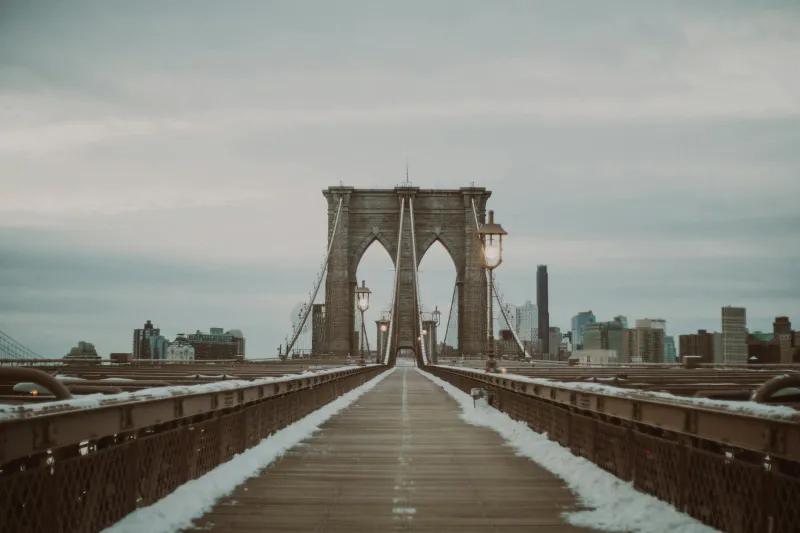
In 1901, a well-dressed gentleman approached a recent Italian immigrant near the Brooklyn Bridge with an irresistible business opportunity. The man — who introduced himself as George Parker — explained that he was the bridge's owner and, due to financial difficulties, needed to sell it quickly. The price? A mere $200 for one of New York's most valuable assets.
The immigrant bought it immediately. Two days later, police had to physically remove him from the bridge as he attempted to install a toll booth.
This wasn't a one-time scam — it was Parker's regular Tuesday.
The Golden Age of Impossible Sales
George C. Parker operated during the peak years of American immigration, when millions of newcomers arrived in New York with limited English, boundless optimism, and just enough savings to make them perfect marks. Between 1883 and 1928, Parker sold the Brooklyn Bridge at least twice a week, sometimes managing multiple sales in a single day.
But Parker wasn't content with just one landmark. His portfolio included the Statue of Liberty ("The government's looking to lease it out"), Madison Square Garden ("Prime real estate, perfect for expansion"), the Metropolitan Museum of Art ("Think of the admission revenue!"), and Grant's Tomb ("Historical significance adds value").
The most absurd part? He had buyers for all of them.
The Art of Authentic Fraud
Parker's success lay in his attention to detail. This wasn't some street corner hustle — it was sophisticated theater. He maintained an office, employed assistants, and produced elaborate fake documentation that looked more official than many legitimate business papers.
His Brooklyn Bridge contracts included detailed surveys, property descriptions, and forged signatures from city officials. He researched his marks carefully, learning their backgrounds and financial situations. Parker would spend days building relationships before making his pitch, often taking potential buyers to expensive dinners to discuss the "investment opportunity."
The con was so convincing that some victims tried to resell their purchases to other immigrants, creating a secondary market for landmarks that nobody actually owned.
When Police Became Customer Service
Parker's scams became so common that the New York Police Department developed standard procedures for handling his victims. Officers regularly patrolled the Brooklyn Bridge to intercept people attempting to set up toll booths, install gates, or begin "renovations" on their newly purchased property.
The police created a special term for Parker's victims: "Brooklyn Bridge material" — people so gullible they'd buy obvious scams. The phrase entered common usage throughout New York, eventually spreading nationwide as slang for someone easily fooled.
Detectives estimated that Parker sold the Brooklyn Bridge at least 1,000 times during his career, though the actual number was likely much higher. Each sale netted between $50 and $500 — substantial sums when the average worker earned $10 per week.
The Immigrant Dream Meets American Reality
Parker's victims weren't stupid — they were hopeful. Many had spent their life savings to reach America and were looking for opportunities to build better lives. The idea of owning a piece of New York's infrastructure seemed like the ultimate American success story.
Immigrants would bring their families to see "their" bridge, proudly explaining their investment to neighbors. Some planned elaborate business ventures around their purchases, calculating toll revenues and maintenance costs. The psychological impact of discovering they'd been conned often devastated families already struggling to establish themselves in a new country.
Parker exploited this hope ruthlessly, tailoring his pitches to each victim's dreams and circumstances. To struggling laborers, he sold the bridge as a guaranteed income source. To ambitious entrepreneurs, he presented it as a prestigious business acquisition.
The Legacy That Outlived the Man
Parker was finally arrested in 1928 and sentenced to life in prison, where he died in 1936. But his cultural impact far outlived his criminal career. The phrase "I've got a bridge to sell you" became permanently embedded in American English as the standard response to obvious lies or impossible claims.
The expression crossed all social and economic boundaries, used by everyone from Wall Street executives to small-town farmers. Parker's Brooklyn Bridge had become a metaphor for gullibility that transcended its original context, appearing in movies, books, and political speeches.
The Economics of Impossible Sales
Modern economists estimate that Parker's total career earnings exceeded $2 million — equivalent to roughly $30 million today. He sold properties he didn't own to people who couldn't legally buy them, creating a thriving market for impossible transactions.
The most remarkable aspect of Parker's operation was its sustainability. Unlike typical con games that rely on finding new victims, Parker could sell the same landmarks repeatedly because his customers rarely compared notes and police couldn't prevent new immigrants from falling for the same scam.
America's Most Successful Salesman
George Parker never owned a single piece of real estate, yet he may have been the most successful property salesman in American history. His "sales" generated millions of dollars in revenue, created lasting cultural expressions, and forced law enforcement to develop new procedures for handling commercial fraud.
The ultimate irony? Parker's victims were pursuing the American Dream by trying to buy pieces of America — and in a twisted way, they succeeded. They became part of American folklore, their gullibility immortalized in a phrase that perfectly captures the tension between hope and reality in the immigrant experience.
Sometimes the most successful businesses are built on selling things that don't exist. And sometimes, the most lasting legacies come from crimes so audacious they become cultural touchstones.