The Prescription Whiskey King: How One St. Louis Pharmacist Legally Flooded America with Bourbon During Prohibition
The Doctor's Orders That Kept America Drunk
When the 18th Amendment took effect at midnight on January 17, 1920, America officially went dry. What most people didn't realize was that Congress had accidentally left the back door wide open — and one enterprising pharmacist in St. Louis was about to drive a truck full of bourbon straight through it.
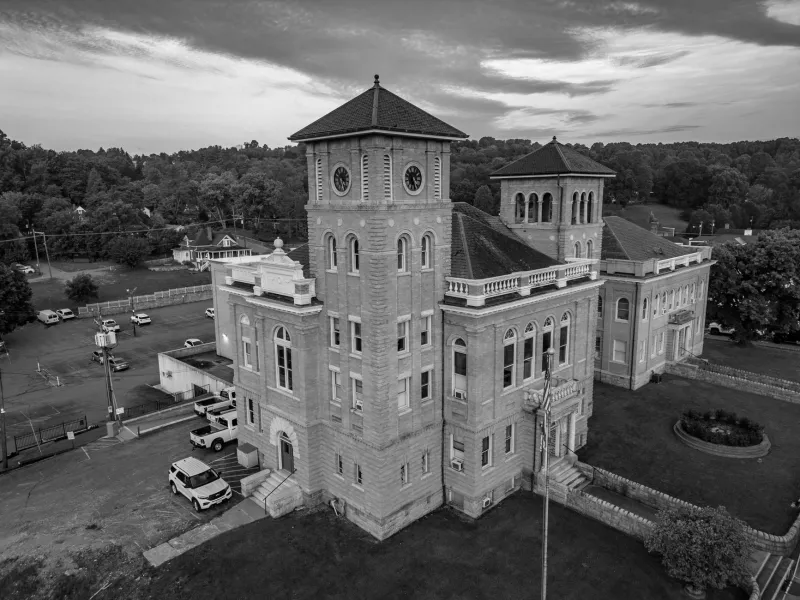
 Photo: St. Louis, via histoiregeolesto.weebly.com
Charles Walgreen Sr. — yes, that Walgreen — wasn't the only druggist who noticed that the Volstead Act contained a curious exemption. Licensed pharmacists could dispense up to one pint of whiskey every ten days to any patient with a doctor's prescription for "medicinal purposes." But while most pharmacists treated this as a minor sideline, Walgreen turned it into an empire that made him rich and drove federal agents absolutely insane.
 Photo: Charles Walgreen Sr., via miro.medium.com
The Loophole That Swallowed Prohibition
The medicinal alcohol exemption wasn't an oversight — it was a deliberate compromise designed to get the legislation passed. Doctors had been prescribing alcohol for various ailments for decades, and the medical establishment argued that banning it entirely would constitute dangerous government overreach into medical practice.
Congress agreed, but they severely underestimated how broadly "medicinal purposes" could be interpreted. The law allowed whiskey to be prescribed for conditions including "depression, anxiety, insomnia, loss of appetite, and general malaise" — symptoms that, remarkably, seemed to afflict a significant portion of the American population starting in January 1920.
Charles Walgreen recognized opportunity when he saw it. Within months of Prohibition taking effect, his chain of Chicago-area drugstores had become the most popular "medical" destinations in the Midwest. But it was his expansion into St. Louis that really caught federal attention.
The Prescription Mill That Broke Records
By 1922, Walgreen's St. Louis operation was dispensing an average of 2,000 pints of medicinal whiskey per week — enough to keep a small city comfortably buzzed. Federal agents began investigating after noticing that Walgreen's stores were ordering more whiskey than some states had consumed before Prohibition.
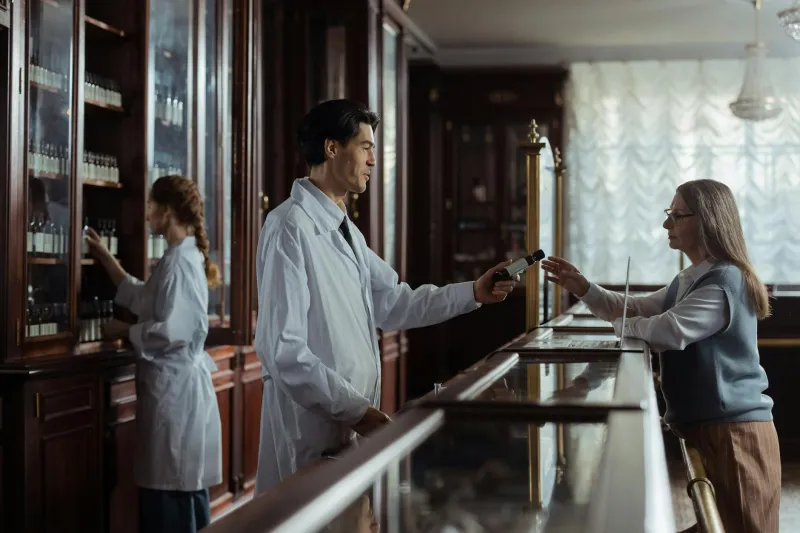
The system was brilliantly simple. Patients would visit one of several dozen doctors who had agreements with Walgreen's pharmacies. These doctors would diagnose them with conditions that required alcohol treatment and write prescriptions accordingly. The patients would then take their prescriptions to a Walgreen's pharmacy, pay for their "medicine," and walk out with a pint of genuine, government-approved bourbon.
What made the operation legally bulletproof was that everything was technically legitimate. The doctors were real doctors making real diagnoses. The prescriptions were genuine medical documents. The whiskey was authentic, properly labeled medicine dispensed by licensed pharmacists. Every step of the process was exactly what Congress had authorized.
The Numbers That Made Federal Agents Weep
Federal investigators discovered that Walgreen's St. Louis network was responsible for approximately 40% of all legal alcohol consumption in Missouri. In a city of about 800,000 people, Walgreen was dispensing enough whiskey to supply roughly 10,000 regular drinkers with their weekly ration.
The operation was so successful that it created a secondary economy. "Prescription brokers" would buy legitimate prescriptions from people who didn't drink and resell them to people who did. Some enterprising individuals made regular rounds to multiple doctors, collecting prescriptions for various alcohol-treatable ailments and then selling them outside Walgreen's stores.
By 1924, Walgreen's medicinal alcohol business was generating more revenue than his traditional pharmacy operations. The company's stock price tripled between 1920 and 1925, making Walgreen one of the wealthiest men in Chicago and establishing the foundation for what would become America's largest pharmacy chain.
When the Government Tried to Fight Back
Federal agents spent three years trying to find something illegal about Walgreen's operation and came up empty-handed. They interviewed patients, investigated doctors, audited prescriptions, and analyzed consumption patterns. Every investigation reached the same conclusion: Walgreen was following the law exactly as Congress had written it.
Desperate to shut down what they saw as a mockery of Prohibition, federal authorities tried changing the regulations. In 1923, they limited doctors to prescribing alcohol for only specific, listed conditions. Walgreen's doctors simply began diagnosing more patients with those specific conditions.
In 1924, authorities required patients to wait 15 days between prescriptions instead of 10. Walgreen's network adapted by recruiting more doctors and spreading patients across multiple practices. When authorities limited the number of prescriptions each doctor could write per month, Walgreen simply contracted with more doctors.
The Loophole That Ate Itself
The federal government's attempts to close the medicinal alcohol loophole actually made the problem worse. Each new restriction created opportunities for more creative interpretations of the law. By 1925, an estimated 15,000 doctors nationwide were writing alcohol prescriptions, and legitimate pharmaceutical companies were producing more whiskey than had been legally consumed in America before Prohibition.
The situation became so absurd that Treasury Secretary Andrew Mellon publicly complained that the government was spending more money enforcing alcohol regulations than it was collecting in taxes from legal alcohol sales. Federal agents were simultaneously raiding illegal speakeasies while protecting legal alcohol shipments to pharmacies, sometimes on the same city blocks.
The End of an Era
Walgreen's medicinal alcohol empire finally ended not because of federal enforcement, but because of changing public attitudes. By the late 1920s, the obvious absurdity of Prohibition was becoming politically unsustainable. The stock market crash of 1929 made the potential tax revenue from legal alcohol sales increasingly attractive to cash-strapped governments.
When Prohibition was repealed in 1933, Walgreen smoothly transitioned back to traditional pharmacy operations. He had used the profits from his medicinal alcohol business to expand nationwide, establishing the distribution networks and brand recognition that would make Walgreens a household name.
The Pharmacist Who Beat the System
Charles Walgreen's medicinal alcohol operation demonstrated something that lawmakers had never anticipated: that determined entrepreneurs could follow the letter of the law so precisely that they completely undermined its spirit. He never broke a single regulation, never sold alcohol illegally, and never operated outside the system Congress had created.
Instead, he simply read the fine print more carefully than the people who wrote it, and turned their loophole into a business model that kept America's thirst quenched throughout the "dry" years. In doing so, he proved that sometimes the most effective way to defeat a law isn't to break it — it's to follow it so thoroughly that everyone realizes how ridiculous it was in the first place.
The prescription whiskey king of St. Louis showed America that when it comes to the law of unintended consequences, there's no better teacher than a pharmacist with an eye for opportunity and a talent for reading the fine print.