The Paperwork That Defeated Time
In the dusty filing cabinets of Barton County, Kansas, sits a piece of paper that has given lawyers nightmares for over a century. It's the corporate charter for Farmers & Merchants Bank of Great Bend, filed on a sweltering July day in 1883 by a town clerk whose sloppy handwriting accidentally made his bank legally immortal.
 Photo: Barton County, via kansastravel.org
 Photo: Great Bend, via img.p.mapq.st
Most banks in the 1880s filed incorporation papers with standard 30-year terms, renewable at the state's discretion. But when clerk Josiah Whitmore filled out the charter application, his pen apparently skipped while writing "30 years." What reached the Kansas Secretary of State's office read something closer to "∞ years" — or as the state interpreted it, "in perpetuity."
Nobody noticed for 127 years.
When Forever Meets Modern Banking Law
The Farmers & Merchants Bank operated normally for decades, weathering the Panic of 1893, two world wars, and the Great Depression. It merged with a larger institution in 1954, and everyone assumed that was the end of the story. The building was sold, the accounts transferred, and Great Bend moved on.
Except the original charter never died.
In 2010, a Kansas State University law student named Rebecca Martinez was researching dormant corporate entities for her thesis when she stumbled across the filing. According to her computer search, Farmers & Merchants Bank was still technically active — not just operational, but legally required to continue existing forever.
"I thought it was a database error," Martinez told the Topeka Capital-Journal years later. "Then I pulled the physical documents."
The Zombie Corporation That Kept Billing
What Martinez discovered sent ripples through the Kansas Department of Revenue that are still being felt today. Because the bank's charter had never been properly dissolved, the state had been treating it as an active corporation for over half a century after it stopped existing. That meant annual filing fees, franchise taxes, and corporate maintenance requirements — all automatically generating penalties when nobody paid them.
By 2010, the "debt" had compounded to over $2.3 million.
But here's where things got truly absurd: Kansas law required the state to keep billing the corporation, even though everyone involved knew it was impossible to collect. The original bank officers were long dead, the assets had been distributed decades ago, and the corporate entity existed only as a legal ghost haunting the state's filing system.
The Lawyers Who Tried to Kill What Cannot Die
The discovery triggered a five-year legal battle that exposed just how unprepared American corporate law is for clerical immortality. The Kansas Attorney General's office initially tried to simply delete the charter, but state law required formal dissolution proceedings — which meant serving legal papers to a corporation that had no officers, no address, and no way to respond.
The state then attempted to declare the bank "constructively dissolved" due to non-payment of fees, but the original charter's language specifically exempted it from standard dissolution procedures. The document's 1883 wording essentially created a corporate entity that could only be killed by an act of God or the Kansas legislature.
"We're dealing with a legal construct that was never supposed to exist," explained Assistant Attorney General David Rebein in court filings. "It's like trying to un-invent something."
The Solution That Created More Problems
In 2015, the Kansas legislature finally passed emergency legislation specifically targeting the Farmers & Merchants Bank charter. The bill, officially titled the "Corporate Immortality Correction Act," retroactively dissolved the bank and wiped out its accumulated penalties.
But the fix created a new problem: it established legal precedent for dissolving "impossible" corporations, which promptly attracted the attention of modern businesses looking to escape their own regulatory obligations. Within six months, three different companies had filed lawsuits claiming their corporate structures were also "impossible" and therefore exempt from dissolution requirements.
The Kansas Supreme Court is still sorting through the mess.
The Clerk's Legacy Lives On
Today, a small plaque outside the Great Bend courthouse commemorates Josiah Whitmore's accidental achievement. But the real monument to his clerical error lives on in Kansas state law, which now requires all corporate charters to include explicit termination language and mandates that filing clerks complete a special training course on "temporal limitations in legal documents."
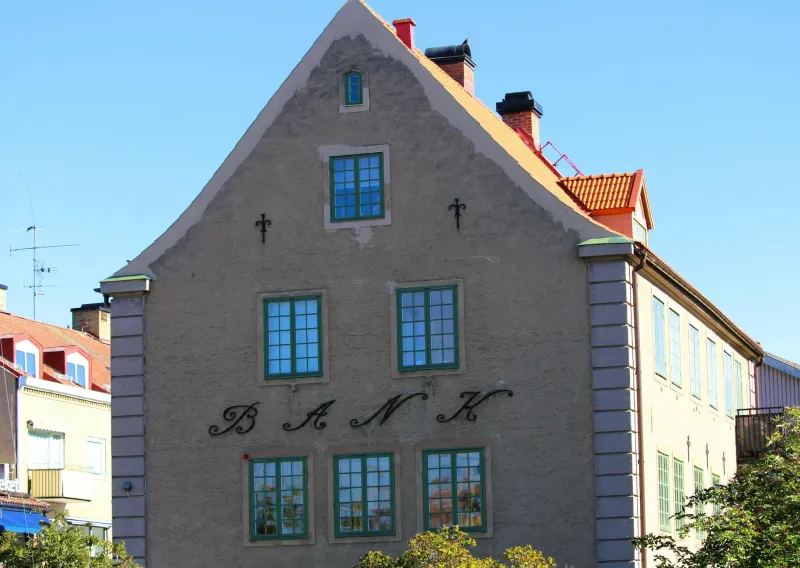
The Farmers & Merchants Bank building still stands on Main Street, currently housing a coffee shop called "The Immortal Bean." The owners, who learned about the building's history from Martinez's thesis, keep a framed copy of the original charter hanging behind the counter.
 Photo: The Immortal Bean, via api.geode-sdk.org
And somewhere in the Kansas Secretary of State's office, filing clerks still double-check every corporate charter for infinity symbols, just in case someone else tries to accidentally defeat death with a fountain pen.
Because in Kansas, they've learned that forever is a very long time to collect interest — even when there's nobody left to pay it.