The Revolution Nobody Noticed
While Silicon Valley was still orange groves and IBM was building room-sized computers for corporations, a mild-mannered librarian in Ohio was quietly solving a problem that would accidentally create the blueprint for the modern internet. Jesse Shera didn't set out to revolutionize global information networks—he just wanted libraries to stop buying the same catalog cards over and over again.
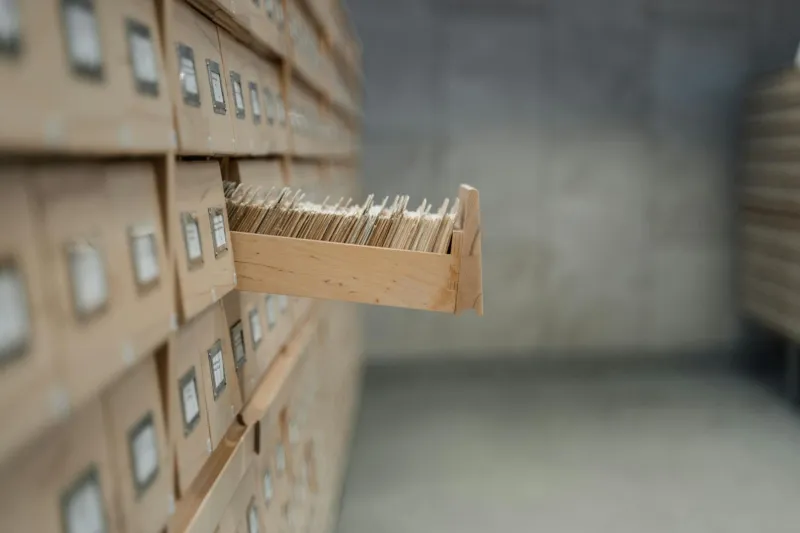
It was 1967, and Shera was watching American libraries waste millions of dollars on duplicate work. Every time a new book was published, thousands of libraries across the country would independently create identical catalog cards with the same author, title, and subject information. It was like having every McDonald's franchise write their own Big Mac recipe from scratch.
The Card Catalog Conspiracy
Shera, working at Ohio College Library Center (later renamed OCLC), proposed something radical: What if libraries could share their catalog information? Not just locally, but nationally. Create the card once, use it everywhere.
The idea sounds mundane now, but in the 1960s it was genuinely revolutionary. Libraries had operated as isolated information islands for centuries. Shera was essentially proposing to network them into a single, searchable database—decades before anyone used the word "database" in casual conversation.
His colleagues thought he was dreaming. The technical challenges seemed insurmountable. How do you connect libraries in Ohio to libraries in California when long-distance phone calls cost a fortune and computer networks existed mainly in science fiction?
The Accidental Internet Pioneer
Shera's solution was elegantly simple: Build a central computer system that libraries could dial into using regular phone lines. Libraries would contribute their catalog information to the shared database and could search everyone else's contributions in return.
Sound familiar? It should. Shera had just described client-server architecture, distributed databases, and networked information sharing—the fundamental concepts that would later power the World Wide Web.
The first OCLC terminal went online in 1971, connecting Ohio State University's library to the central computer. Within months, libraries across Ohio were joining the network. By 1973, institutions in other states were clamoring to connect.
The Network That Ate the World
What happened next surprised everyone, including Shera. The network effect kicked in with a vengeance. As more libraries joined OCLC, the shared database became exponentially more valuable. Soon, libraries weren't just sharing catalog cards—they were coordinating interlibrary loans, tracking which institutions owned which books, and enabling patrons to request materials from anywhere in the country.
Shera had accidentally created something much bigger than a catalog-sharing service. He'd built the world's first large-scale information network, connecting thousands of institutions across multiple countries into a single, searchable knowledge base.
By 1979, OCLC connected over 2,000 libraries. Today, it links more than 72,000 libraries in 170 countries. Every time you search your local library's catalog online, you're using Jesse Shera's network.
The Infrastructure Nobody Talks About
Here's the truly absurd part: While computer historians celebrate ARPANET as the internet's predecessor, they largely ignore OCLC—despite the fact that Shera's library network was serving real users and handling real transactions years before most people had heard of email.
OCLC pioneered online search interfaces, real-time database updates, and distributed network architecture. They solved problems like data standardization, network reliability, and user authentication that would later challenge every internet startup.
Yet Shera never appeared on magazine covers or gave TED talks. He was just a librarian who wanted to eliminate redundant paperwork.
The Quiet Genius of Library Science
Shera's background perfectly positioned him for this accidental revolution. He'd spent decades studying how information flows through organizations and societies. While computer scientists were focused on processing power and storage capacity, Shera understood something more fundamental: The real challenge wasn't technical—it was organizational.
How do you get thousands of independent institutions to agree on data standards? How do you convince librarians in Maine to trust catalog information created by librarians in California? How do you build something that serves everyone without being controlled by anyone?
These questions would later torment every internet pioneer from Tim Berners-Lee to the founders of Wikipedia. Shera solved them in the 1960s using a combination of diplomatic skill, technical insight, and sheer midwestern persistence.
The Network That Never Crashed
Perhaps most remarkably, OCLC has operated continuously for over 50 years without a single catastrophic failure. While dot-com companies rose and fell, while social media platforms came and went, Shera's library network just kept quietly serving millions of users every day.
It's the most successful internet service most people have never heard of—a testament to the power of boring, practical engineering over flashy innovation.
The Legacy Hidden in Plain Sight
Today, when tech billionaires claim to be "connecting the world," they're following a playbook written by an Ohio librarian who never owned a single share of stock in a technology company. Shera proved that the most transformative innovations often come from people solving mundane problems with methodical precision.
Every Google search, every Wikipedia edit, every time you access information from anywhere in the world—you're benefiting from principles that Jesse Shera pioneered while trying to eliminate duplicate catalog cards in Ohio libraries.
The internet didn't start in a Silicon Valley garage. It started in a midwestern library, built by someone who understood that information wants to be organized, shared, and accessible to everyone. We just forgot to give him credit for it.