When the Pentagon's Worst Day Landed in a Suburban Backyard
The Day the Sky Fell on Mars Bluff
Imagine stepping outside your house on a Tuesday afternoon and watching a 3,000-pound nuclear bomb plummet from the sky and explode 200 feet away. That's what Walter Gregg and his family experienced on March 11, 1958, in the small community of Mars Bluff, South Carolina—a moment so surreal it reads like rejected Hollywood fiction.
Walter was working in his yard that morning while his wife Effie was inside their modest home with their three children. Their calm Tuesday was shattered when a United States Air Force B-47 Stratojet bomber, flying from Hunter Air Force Base in Georgia, encountered a mechanical failure at 7,000 feet. The pilot, Captain Bruce Kulka, was struggling to lower the landing gear when he accidentally released the bomb—an MK-6 thermonuclear warhead—directly over their neighborhood.
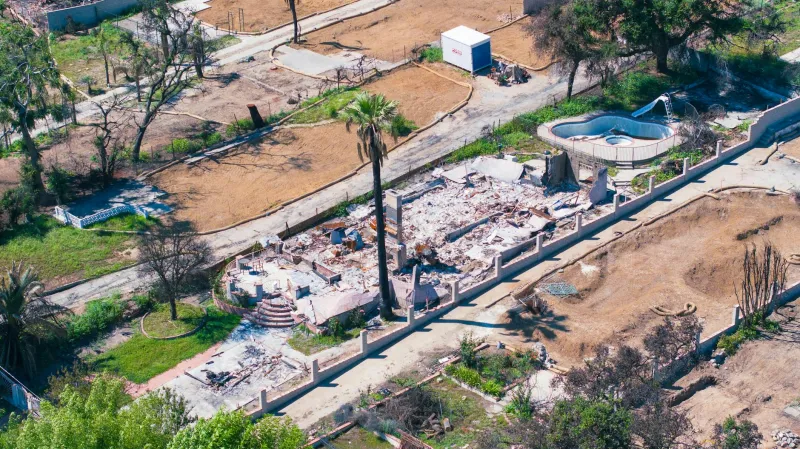
The weapon screamed toward Earth and detonated on impact, creating a 70-foot-wide crater roughly 200 feet from the Gregg home. The conventional explosives in the bomb's trigger mechanism exploded with full force, sending shock waves that ripped the roof off their house, shattered windows across the entire neighborhood, and destroyed a nearby tobacco barn. The blast was so violent that residents miles away thought a major industrial accident had occurred.
The Miracle Nobody Talks About
Here's where the story gets genuinely bizarre: the nuclear core inside the warhead was not armed. Because of a safety mechanism designed to prevent accidental detonation, the thermonuclear payload never activated. If it had, Mars Bluff wouldn't exist anymore. Thousands of people in the surrounding area would have been vaporized instantly. Instead, the Gregg family survived—though their home did not.
Walter was knocked down by the blast but managed to get up and run inside to find his wife and children. Miraculously, despite the catastrophic structural damage, nobody in the immediate area was killed. Effie was bruised and shaken, but alive. The children were terrified but unharmed. It was, by any reasonable measure, the luckiest survival story in American military history.
Yet what happened next reveals something darker about how the U.S. government handled nuclear accidents on American soil.
The Quiet Cover-Up
The Air Force showed up within hours and cordoned off the area. Military personnel swept through Mars Bluff, collected debris, and began a peculiar dance of damage control. The government classified the incident as a "Broken Arrow"—the military's term for a nuclear weapons accident that doesn't pose a risk of nuclear war. But the public announcement was deliberately vague.
Official statements claimed the bomb's conventional explosives had detonated, but they buried the fact that a live nuclear warhead had been dropped on an American suburb. The Gregg family was offered a settlement of around $54,000 (roughly $600,000 in today's money), which was substantial for 1958 but hardly appropriate compensation for nearly losing their lives to government negligence. More troubling: they were pressured to sign non-disclosure agreements that kept them quiet about the incident for decades.
The Air Force released a report confirming the accident, but most Americans never heard about it. The story didn't make national headlines in the way it should have. In an era before the internet, when Americans relied on newspapers and evening news broadcasts, the government's quiet handling of the story meant most people remained oblivious to the fact that a thermonuclear device had just detonated in a residential neighborhood.
A Pattern of Accidents America Didn't Know About
Mars Bluff wasn't an isolated incident. Declassified documents later revealed that between 1950 and 1968, the U.S. military experienced approximately 1,200 accidents involving nuclear weapons. At least 32 of these accidents involved nuclear warheads being dropped, lost, or nearly detonated. Most Americans had no idea this was happening.
In 1961, a B-52 broke apart over Goldsboro, North Carolina, dropping two nuclear bombs. Both weapons' safety systems miraculously failed to trigger. In 1968, a B-52 carrying four thermonuclear bombs crashed near Thule Air Base in Greenland. The wreckage contaminated the Arctic. Each time, the government's response was essentially the same: handle it quietly, classify the details, settle with affected parties under strict secrecy.
Walter Gregg lived until 1992, watching his story remain largely forgotten while he carried the weight of knowing how close his family came to annihilation. The crater in his backyard was eventually filled in, but the incident itself was never fully acknowledged by the government as the catastrophe it truly was.
The Uncomfortable Truth
What makes the Mars Bluff incident so unsettling isn't just that it happened—it's that it could have ended very differently, and if it had, we might never have known. The safety systems worked by pure chance. The nuclear core didn't arm by pure luck. The family survived by pure accident. And the government's response was to make sure as few people as possible understood how fragile the margin between safety and disaster actually was.
Today, declassified documents tell the full story. But for decades, Mars Bluff remained a footnote, a strange historical curiosity that proved one thing beyond doubt: sometimes reality is far more dangerous and far stranger than any fiction could capture.