The 80-Man Army That Came Back With 81 Soldiers and Stayed at War for Six Decades
When Your Entire Army Fits in a School Bus
Imagine commanding a military so small you could fit the entire force in a couple of minivans. Now imagine that this pocket-sized army somehow managed to stay technically at war with one of Europe's most powerful nations for over half a century — completely by accident.
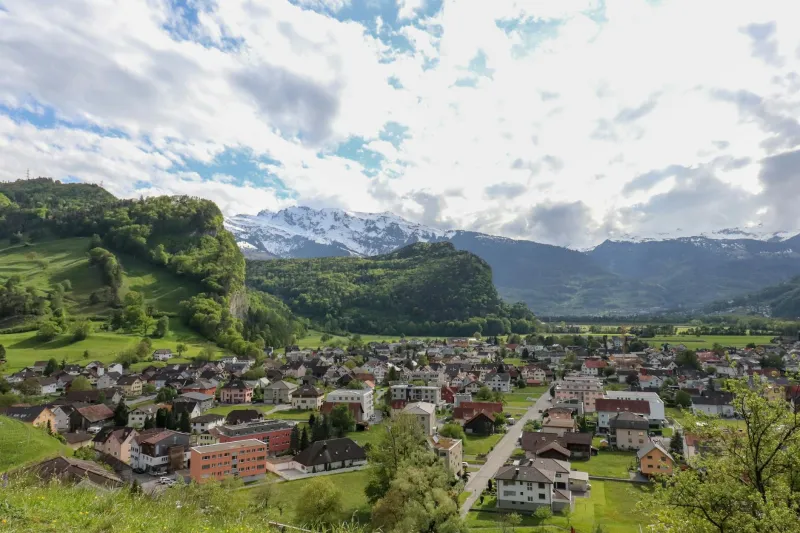
Welcome to the wonderfully absurd military history of Liechtenstein, a country so tiny it makes Rhode Island look like Texas. This Alpine microstate, squeezed between Austria and Switzerland like a geographical afterthought, once pulled off what might be history's most accidentally hilarious military campaign.
The War That Everyone Forgot About
In 1866, Europe was having one of its periodic continental tantrums. The Austro-Prussian War was reshaping the German Confederation, and tiny Liechtenstein found itself dragged into the mess. As a member of the German Confederation, the principality was obligated to contribute forces to the Austrian side against Prussia.
Prince Johann II of Liechtenstein, ruling over a country with fewer people than most American suburbs, dutifully mobilized his nation's entire military: a whopping 80 soldiers. To put this in perspective, most high school marching bands have more members than Liechtenstein's army.
These 80 brave souls — essentially the entire male population of fighting age — marched off to defend the Austrian border. They were tasked with guarding the Tyrolean frontier, probably the cushiest assignment in military history considering they never saw actual combat.
The Mathematical Miracle of Military Friendship
Here's where the story takes a turn from merely small-scale to genuinely bizarre. When the war ended and Liechtenstein's mighty military force returned home, something extraordinary had happened: they came back with 81 soldiers.
No, this wasn't some kind of battlefield multiplication miracle. The extra soldier was an Austrian friend they'd made during their deployment. Apparently, the Liechtenstein forces were such pleasant company that this Austrian decided to tag along back to their tiny principality. It's possibly the only military campaign in history where the army's most significant achievement was making a new buddy.
This mathematical impossibility — losing zero soldiers while gaining one — became a source of national pride. In a world where military victories are usually measured in territory conquered or enemies defeated, Liechtenstein's army had achieved something far more impressive: a 101% return rate on personnel.
The Paperwork Problem That Lasted Six Decades
But here's where administrative oversight meets historical comedy. When the Austro-Prussian War ended, various treaties were signed, borders were redrawn, and most participants formally concluded their state of war. Liechtenstein, however, fell through the bureaucratic cracks.
The Peace of Prague in 1866 officially ended the conflict, but somehow nobody remembered to include tiny Liechtenstein in the paperwork. The principality remained technically at war with Prussia — and later, when Prussia became part of the German Empire, with Germany itself.
For sixty years, this microscopic nation was officially in a state of war with one of Europe's most powerful countries. Nobody noticed. Not the Germans, busy building an empire and fighting two world wars. Not the Liechtensteiners, who were probably too polite to bring it up. Not the international community, who had apparently forgotten Liechtenstein existed entirely.
The Most Low-Stakes Conflict in History
During these six decades of "war," absolutely nothing happened. No battles were fought. No territories were contested. No diplomatic incidents occurred. Germany and Liechtenstein maintained perfectly normal relations, completely oblivious to their technical state of hostility.
Liechtenstein's army was eventually disbanded entirely in 1868, making them perhaps the only nation to remain at war while simultaneously having no military whatsoever. It's like declaring war and then forgetting to show up for the fight.
The situation became even more absurd during World War I, when Liechtenstein remained neutral while technically being at war with Germany. German and Austrian troops regularly passed through Liechtenstein territory with the principality's permission, creating the surreal situation of a country hosting the military forces of a nation it was supposedly fighting.
Finally Making Peace in the Internet Age
The oversight wasn't corrected until 2007, when some historically-minded bureaucrat finally noticed the paperwork problem. After 141 years of accidental warfare, Liechtenstein and Germany finally signed a formal peace treaty.
By then, the original 80 soldiers were long dead, their Austrian friend was presumably deceased, and the world had changed beyond recognition. The German Empire had risen and fallen, been replaced by the Weimar Republic, then Nazi Germany, then divided into East and West Germany, and finally reunified. Through all these transformations, tiny Liechtenstein had remained technically at war with whatever German entity existed at the time.
The Lesson in Bureaucratic Absurdity
Liechtenstein's accidental war perfectly captures the absurdity of human bureaucracy. In a world obsessed with military might and international conflict, a country smaller than most American counties managed to stay "at war" for over half a century through pure administrative oversight.
The story also highlights something uniquely charming about small-scale military operations. When your entire army can fit in a few cars and comes home with bonus soldiers instead of casualties, warfare takes on an almost neighborly quality that's completely absent from modern military conflicts.
Today, Liechtenstein remains one of the few countries in the world without a standing army, protected by its neutrality and Switzerland's military. But for 141 years, they held the distinction of being simultaneously the world's smallest military power and its most accidentally belligerent nation — a bureaucratic comedy that proves sometimes reality truly is stranger than fiction.