When Pigs Fly (And Then Land on Private Property)
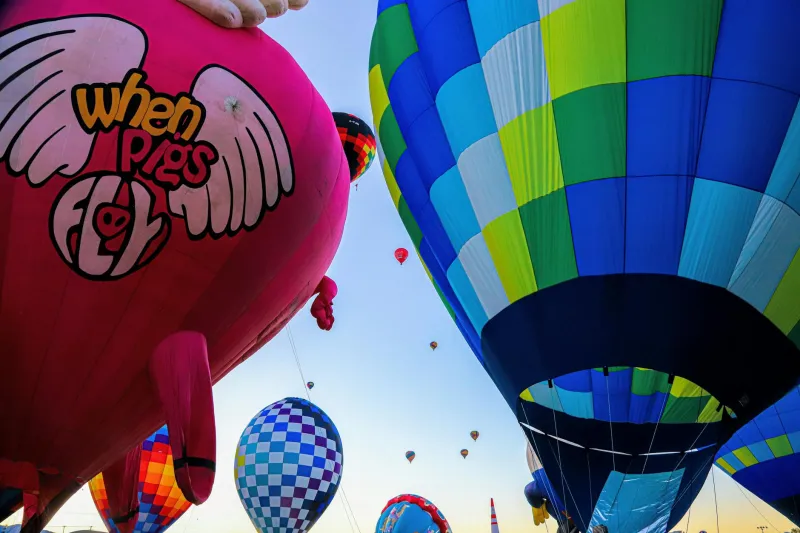
It started as a typical Albuquerque Balloon Fiesta morning in October 1972. Dozens of colorful hot air balloons were preparing for launch, including a crowd favorite: a massive pink balloon shaped like a cartoon pig, complete with curly tail and grinning snout. The "Flying Piggy" was supposed to drift gently over the festival grounds, delight children, and land safely in a designated field.
Instead, it broke free from its handlers, caught an unexpected wind current, and embarked on an unauthorized 40-mile journey across the New Mexico desert. What happened next would tie up federal aviation lawyers for two years and create a legal precedent that still influences American airspace law today.
The Rancher Who Loved His New Lawn Ornament
The runaway pig finally touched down on the remote cattle ranch of Ezra Whitman, a cantankerous 67-year-old who'd been fighting with various government agencies over land rights for decades. Most property owners would have called the festival organizers to arrange pickup. Whitman had a different idea.
He declared the balloon pig to be abandoned property under New Mexico state law, claimed ownership, and—here's where it gets truly absurd—immediately filed paperwork with Bernalillo County to have it designated as a "historic landmark of cultural significance."
Whitman's reasoning was ironclad in its ridiculousness: The balloon represented "man's eternal dream of flight" and had achieved "unassisted atmospheric navigation" across significant terrain. He argued that its accidental landing on his ranch was "an act of aeronautical destiny" that deserved preservation for future generations.
The Legal Circus Nobody Saw Coming
The festival organizers wanted their pig back. They'd spent $3,000 on the custom balloon (about $20,000 in today's money) and needed it for upcoming events. But when they arrived at Whitman's ranch with a truck and trailer, they found the balloon pig surrounded by a makeshift fence with a hand-painted sign reading "HISTORIC SITE - NO TRESPASSING - FEDERAL OFFENSE TO DISTURB."
Whitman had done his homework. New Mexico's landmark preservation laws included provisions for "emergency designation" of culturally significant objects, with hefty fines for anyone who damaged or removed protected items without proper permits. The process for challenging a landmark designation could take months.
Meanwhile, the balloon pig sat in the desert, slowly deflating and fading from pink to a sun-bleached salmon color, while lawyers tried to figure out who actually owned it.
The Federal Aviation Administration Enters the Chat
The case took a surreal turn when the FAA got involved. Federal regulations clearly stated that aircraft—including hot air balloons—remained the property of their registered owners even after emergency or unplanned landings. But the FAA had never dealt with a situation where the aircraft was also claimed as a historic landmark by the property owner where it landed.
FAA attorney Margaret Chen found herself writing legal briefs about whether a deflated balloon pig constituted an "aircraft" under federal law, whether emergency landings on private property transferred ownership rights, and—most bizarrely—whether historical landmark status could supersede federal aviation regulations.
The Loophole That Broke Aviation Law
The case exposed a genuine gap in American jurisprudence. Federal aviation law assumed that aircraft would either land at designated airports or crash in ways that made ownership disputes moot. Nobody had considered what happens when an aircraft lands safely but inconveniently on private property and the landowner decides to keep it.
State property laws generally favor landowners when objects are "abandoned" on their land. But federal aviation law maintains that aircraft remain the property of their registered owners regardless of where they end up. The balloon pig had created a direct conflict between state and federal authority.
Legal scholars began following the case with fascination. Law review articles appeared with titles like "When Property Rights Collide with Airspace: The Balloon Pig Precedent" and "Abandoned Aircraft and the Limits of Federal Preemption."
The Compromise Nobody Expected
After 18 months of legal wrangling, the parties reached a settlement that satisfied nobody and amused everyone. Whitman would keep the balloon pig as a "permanent installation" on his ranch, but the festival organizers retained intellectual property rights to the pig's design and likeness.
The county agreed to maintain the landmark designation, creating what may be the only officially recognized historic balloon pig in American history. The FAA issued new guidelines clarifying that "novelty aircraft" landing on private property remained subject to federal aviation regulations regardless of state landmark laws.
Whitman got to keep his pig, the festival got to use the design for future balloons, and federal lawyers got new regulations to prevent similar disputes.
The Pig That Changed Aviation Law
The "Balloon Pig Amendment" quietly became part of federal aviation regulations in 1974. It established clear procedures for recovering aircraft that land on private property and created exemptions for "emergency or unplanned landings" from state abandonment laws.
The regulations have been invoked dozens of times since 1974, usually for small aircraft making emergency landings on farms or private airstrips. But they exist because a pink balloon pig drifted off course in New Mexico and landed on the property of a stubborn rancher who decided to make it a tourist attraction.
The Landmark That Time Forgot
Ezra Whitman died in 1989, and his ranch was eventually sold to developers. The balloon pig—or what remained of it after 17 years in the desert—disappeared during construction of a shopping center. The landmark designation was quietly revoked in 1995.
But the legal precedent lives on. Every time an aircraft makes an unplanned landing on private property, federal aviation lawyers consult regulations that were written because one man in New Mexico really, really wanted to keep an inflatable pig in his backyard.
Sometimes the most important legal precedents come from the most ridiculous circumstances. The Balloon Pig Case proved that American law could adapt to absurd situations—as long as someone was stubborn enough to force the issue and creative enough to find the loopholes that nobody knew existed.