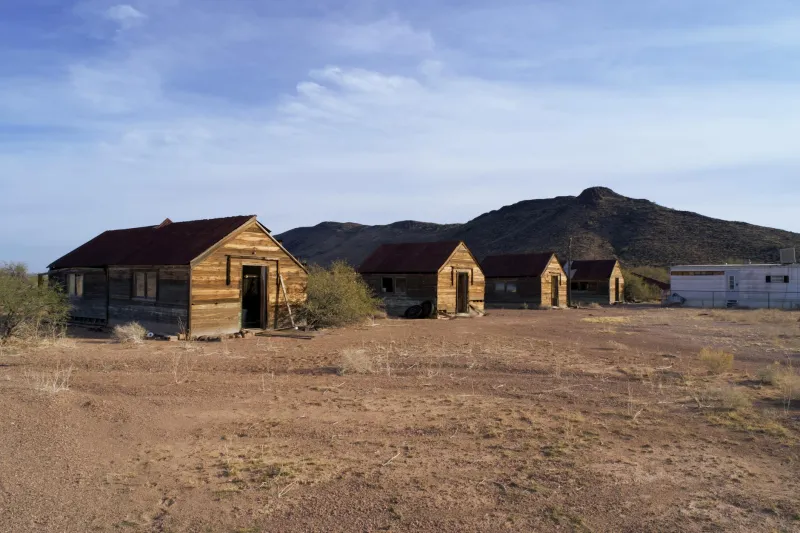
The Bill That Time Forgot
Every January for the past 137 years, the Mineral County Tax Assessor's office in Hawthorne, Nevada has printed a property tax bill for Parcel #041-234-15 and mailed it to the "Goldfield Extraction & Mining Company, General Delivery, Belleville, Nevada."
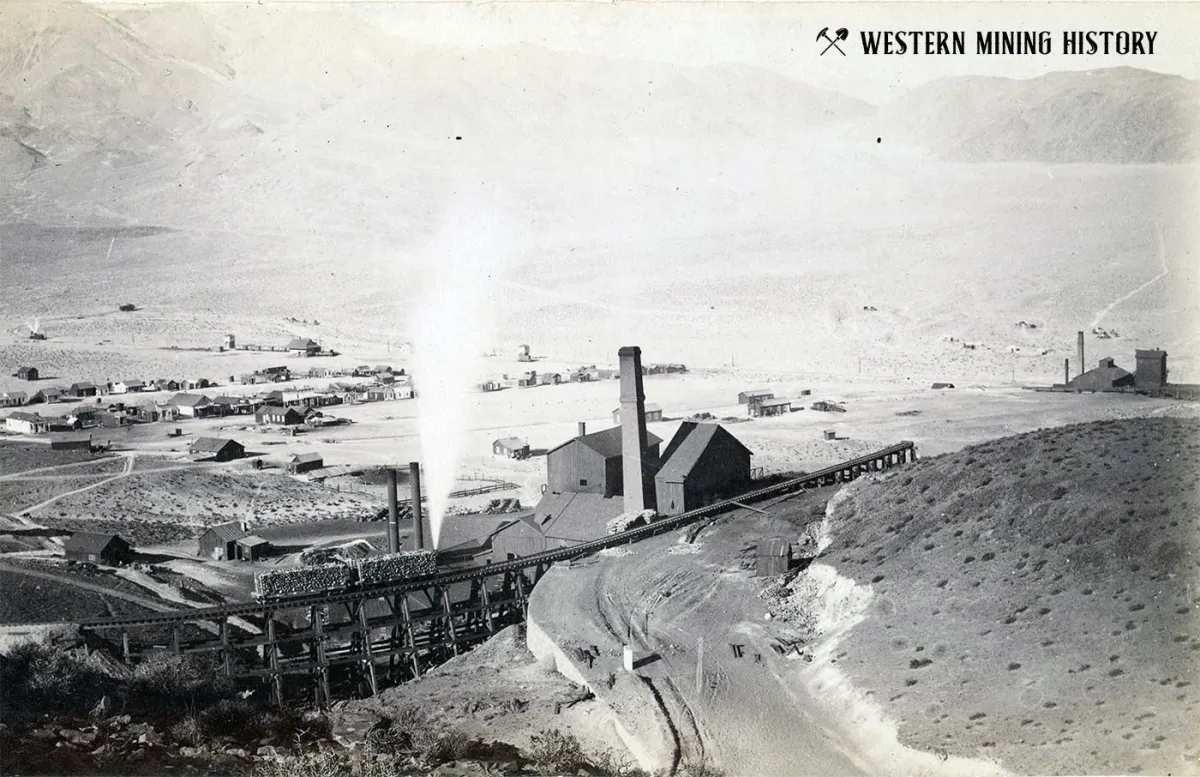 Photo: Belleville, Nevada, via westernmininghistory.com
 Photo: Hawthorne, Nevada, via travelnevada.com
The building burned down in 1887. The company dissolved in 1885. The town of Belleville hasn't existed since 1923. And yet, the tax bill keeps coming, as reliable as sunrise and twice as persistent.
The annual amount? $847.32, plus penalties and interest that now total more than the assessed value of the entire ghost town.
The Paper Trail That Leads Nowhere
The story begins in 1884, when the Goldfield Extraction & Mining Company filed a property deed for a wooden assay office and smelting facility in Belleville, a booming silver camp about 90 miles southeast of Reno. The deed was properly recorded, the taxes were paid, and for three years everything proceeded normally.
Then the silver market crashed.
In 1885, Goldfield Extraction dissolved its Nevada operations and transferred its assets to a parent company in Colorado. But the property deed transfer was never filed with Mineral County — partly because the company's Nevada office had already closed, and partly because nobody thought a wooden building in a dying mining camp was worth the paperwork.
Two years later, a kerosene lamp tipped over in the abandoned assay office, and Belleville's last major building burned to the ground.
The Bureaucracy That Cannot Stop
By 1890, Belleville was effectively dead. The post office closed, the remaining residents drifted away, and the site reverted to sagebrush and jackrabbits. But Mineral County's tax rolls are forever.
Under Nevada state law, property taxes continue until ownership is legally transferred or the county formally declares a property "uncollectable." Since the Goldfield deed was never properly transferred, the county had no legal mechanism to remove it from the tax rolls — even though everyone involved knew the situation was absurd.
"We can't just delete properties because they seem problematic," explains current Mineral County Assessor Janet Morrison. "State law requires us to follow specific procedures, even when those procedures don't make sense."
The Historian Who Opened Pandora's Tax File
The modern chapter of this story begins in 2018, when local historian Tom Metscher was researching abandoned mining claims for a book about Nevada ghost towns. While digging through county records, he noticed something odd: Belleville was still generating tax revenue — on paper.
"I thought it was a clerical error," Metscher recalls. "Then I started pulling files, and realized this thing had been running on autopilot for over a century."
What Metscher discovered was a bureaucratic perpetual motion machine. Every year, the county would assess taxes on the non-existent building. When nobody paid, penalties would accrue. When the penalties reached a certain threshold, the county would initiate collection procedures — sending certified letters to addresses that hadn't existed for decades.
The certified mail would come back undeliverable, triggering additional administrative fees. Those fees would generate new penalty assessments, creating an endless cycle of fictional debt accumulation.
By 2018, the "owed" amount had grown to $127,000.
The Legal Maze That Traps the Living and the Dead
Metscher's attempts to resolve the situation revealed just how unprepared modern bureaucracy is for century-old clerical problems. To remove the property from tax rolls, Mineral County needed either:
- Proof that the Goldfield Extraction & Mining Company had formally dissolved (the Colorado corporation had been defunct for 130 years, with no surviving records)
- A court order declaring the property "abandoned" (which required serving legal papers to the non-existent company)
- A quitclaim deed from the legal owner (who had been dead since the McKinley administration)
Each option required expensive legal procedures that would cost more than the county could ever hope to collect.
"We're trapped in a legal catch-22 that was created before anyone alive was born," said County Commissioner Sarah Patterson. "The system requires us to keep billing ghosts because we can't prove the ghosts are dead."
The Domino Effect Nobody Saw Coming
Metscher's research uncovered an even bigger problem: Belleville wasn't unique. Across rural Nevada, dozens of similar "zombie properties" were still generating phantom tax bills for buildings that had been gone for decades.
Some belonged to mining companies that dissolved during the Great Depression. Others were tied to railroad corporations that ceased operations in the 1950s. A few traced back to territorial-era land grants that predated Nevada statehood.
Each one represented the same bureaucratic paradox: properties that couldn't be removed from tax rolls because the legal owners no longer existed, but couldn't be declared abandoned because the proper procedures required cooperation from those same non-existent owners.
The Solution That Created More Problems
In 2019, the Nevada legislature passed Assembly Bill 478, the "Historic Property Tax Resolution Act," specifically designed to address century-old tax problems. The bill allowed counties to remove properties from tax rolls if they could prove the assessed structures no longer existed and the original owners had been defunct for more than 50 years.
The law seemed to solve everything — until counties started using it.
Within months, property owners across Nevada began arguing that their tax bills should be canceled because their buildings were "historically defunct" or their property rights traced back to "dissolved entities." Real estate lawyers discovered they could challenge almost any long-standing property assessment by questioning the legal continuity of previous owners.
The Nevada Supreme Court is still sorting through the resulting litigation.
The Ghost Town That Haunts Government Efficiency
Today, Belleville remains on Mineral County's tax rolls, though the assessed amount has been reduced to $1 annually as a "placeholder" while lawyers figure out how to kill what was never really alive. The phantom bills still generate real administrative costs — staff time, postage, computer processing — that add up to several hundred dollars per year.
"It would be cheaper to just pay the ghost's taxes ourselves," jokes Morrison. "But that would probably violate a dozen other state laws."
Metscher, meanwhile, has turned his research into a book called "Taxing the Dead: How Nevada's Ghost Towns Keep Paying Bills." The royalties, he notes with some irony, are subject to state taxes that will probably outlive him by several decades.
Because in Nevada, they've learned that some bureaucratic mistakes achieve a kind of immortality — sending bills to the void with the persistence of cosmic background radiation, forever and ever, world without end, until someone figures out how to make eternity file a change of address form.