How a Christmas Paper Shortage Created America's $9 Billion Gift-Wrapping Obsession
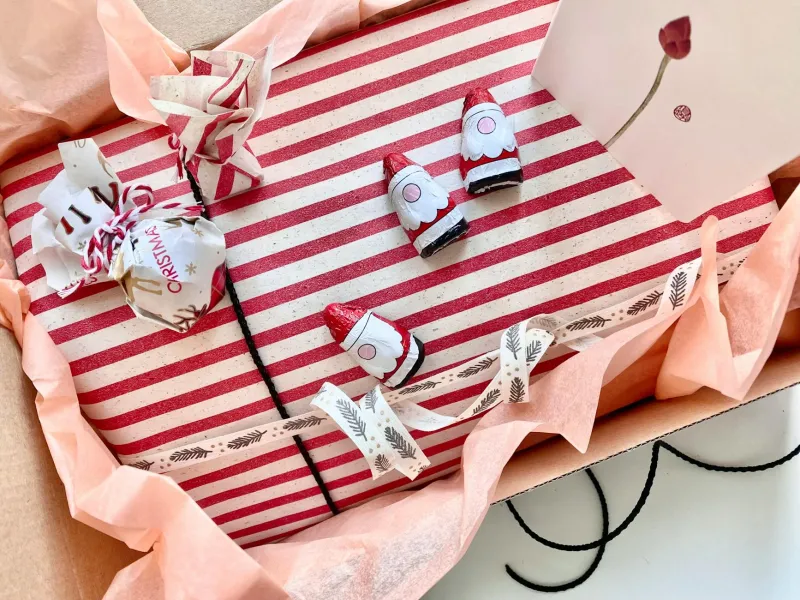
The Panic Before Christmas
Picture this: It's December 1917, World War I is raging, and Joyce Hall is staring at empty shelves where his tissue paper should be. His Kansas City card shop, which would eventually become Hallmark, is about to face the holiday rush with nothing to wrap gifts in. Most people today would call this a business disaster. Hall called it Tuesday.
What happened next would accidentally create one of America's most profitable and wasteful traditions.
When Desperation Meets Innovation
Faced with disappointed customers and a potential holiday catastrophe, Hall did what any resourceful businessman would do: he raided his own supply closet. Hidden away were decorative envelope linings — fancy French papers originally designed to make correspondence look elegant. These weren't cheap tissue paper; they were thick, colorful, and covered in elaborate patterns.
Hall marked them up and sold them as "gift dressing." The response was immediate and overwhelming. Customers didn't just buy the paper — they raved about it. Suddenly, wrapping gifts wasn't just about protecting presents; it became part of the presentation.
The Accidental Empire
What makes this story particularly absurd is that Hall had stumbled onto something he never intended to create. Gift-wrapping as we know it barely existed before 1917. People used brown paper, newspaper, or simple cloth bags. The idea of spending money on decorative paper that would be immediately torn off and thrown away seemed wasteful and frivolous.
But Hall's fancy envelope linings changed everything. By 1919, Hallmark was manufacturing gift wrap specifically for the holidays. Other companies quickly followed suit, and an entire industry was born from what was essentially a supply chain hiccup.
The Numbers Don't Lie
Today's gift-wrap industry generates over $9 billion annually in the United States alone. Americans purchase approximately 2.3 billion square feet of wrapping paper each year — enough to cover the entire state of Rhode Island. During peak holiday seasons, gift wrap sales can account for up to 40% of a retailer's paper goods revenue.
The environmental impact is staggering: most wrapping paper ends up in landfills within 24 hours of purchase, making it one of the most short-lived consumer products ever created. Yet we continue buying it, driven by a tradition that began because one man ran out of tissue paper.
The Cultural Revolution Nobody Saw Coming
The transformation wasn't just commercial — it was cultural. Gift-wrapping became a social expectation, then an art form. Department stores began offering wrapping services. Families developed wrapping traditions. The phrase "it's the thought that counts" evolved to include the presentation of the gift itself.
By the 1950s, not wrapping a gift was considered rude or lazy. What started as Hall's emergency solution had become an unspoken rule of American gift-giving. The irony? The "thought" behind beautiful wrapping originated from the complete absence of thought — pure panic-driven improvisation.
The Ripple Effect
Hall's accidental innovation sparked related industries that didn't exist before: decorative ribbons, gift bags, bow-making machines, and even professional gift-wrapping services. Shopping malls began hiring seasonal gift-wrappers. Craft stores dedicated entire aisles to wrapping supplies.
The most absurd part? Hall himself never fully grasped what he'd unleashed. In later interviews, he spoke about gift wrap as a logical extension of his greeting card business, not as the revolutionary force that transformed American consumer behavior.
A Legacy Written in Wrapping Paper
Joyce Hall died in 1982, having built Hallmark into a greeting card empire worth billions. But his most lasting contribution to American culture wasn't cards or sentiments — it was convincing an entire nation that gifts needed to be beautiful before they were opened.
Every December, as millions of Americans spend hours wrapping presents and billions of dollars on decorative paper, they're participating in a tradition born from one man's Christmas inventory crisis. The woman who accidentally invented a multi-million dollar industry wasn't trying to innovate — she was just trying to avoid disappointing customers during the holidays.
Sometimes the most profitable ideas come from the most mundane problems. And sometimes, running out of tissue paper can wrap up an entire culture in a brand new tradition.