The Beloved Stress Relief Toy That Failed at Everything It Was Actually Designed to Do
The Wallpaper Revolution That Never Was
In the gleaming laboratories of 1950s America, two engineers named Alfred Fielding and Marc Chavannes believed they were about to revolutionize home décor forever. Their vision was ambitious yet simple: create a textured plastic wallpaper that would bring sleek, modern sophistication to American living rooms. What they actually created was something that would never grace a single wall but would become one of the most satisfying tactile experiences known to humanity.
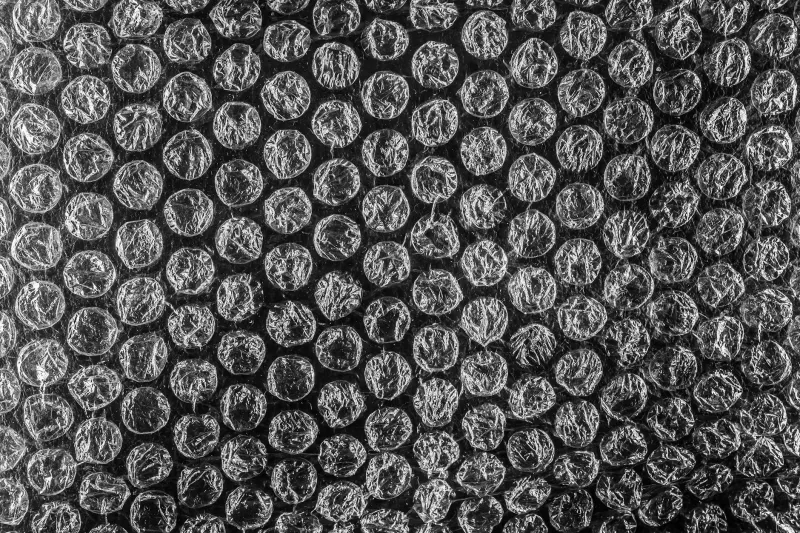
Their invention process was almost comically straightforward. In 1957, working in a garage in Hawthorne, New Jersey, they sealed two shower curtains together, creating air pockets between the plastic layers. The result looked nothing like traditional wallpaper — it resembled more like a sheet covered in tiny plastic blisters. But Fielding and Chavannes were convinced they had stumbled onto something revolutionary.
When Nobody Wants Your Revolutionary Idea
The two inventors confidently approached interior designers, department stores, and wallpaper manufacturers with their creation. They pitched it as the future of home decoration — a three-dimensional wall covering that would add texture and visual interest to any room. The response was universally underwhelming.
Homeowners took one look at the bumpy plastic sheets and politely declined to put them anywhere near their walls. Interior designers couldn't figure out how to incorporate plastic bubble sheets into their sophisticated design schemes. Department stores showed zero interest in stocking what looked like industrial packaging material as home décor.
The product was such a spectacular failure as wallpaper that Fielding and Chavannes began desperately searching for alternative applications. They tried marketing it as greenhouse insulation, reasoning that the air pockets might help regulate temperature for plants. This second attempt was equally unsuccessful — greenhouse operators preferred traditional materials that didn't look like they belonged in a shipping warehouse.
The Accidental Discovery of Joy
While the inventors struggled to find a practical use for their creation, something curious was happening in their demonstrations. People couldn't stop playing with the sample sheets. Potential customers who had no interest in buying the product would spend minutes pressing the air bubbles, listening to the satisfying 'pop' sound, and then pressing more.
Fielding and Chavannes noticed this phenomenon but initially dismissed it as a quirky side effect. They were serious engineers trying to solve serious problems — the fact that their invention was oddly addictive to squeeze seemed irrelevant to their business goals.
The breakthrough came from an entirely unexpected source: IBM's shipping department. In the early 1960s, the computer giant was struggling with how to protect their expensive, delicate machines during transport. Traditional packing materials were either too bulky, too expensive, or insufficiently protective for sensitive electronic equipment.
Someone at IBM — history has not recorded exactly who — looked at Fielding and Chavannes' failed wallpaper experiment and saw something the inventors had missed: the perfect protective packaging material.
The Birth of an Empire
IBM's adoption of bubble wrap (as it came to be known) for computer shipping transformed the failed wallpaper into an instant success. The same properties that made it unsuitable for walls — the bumpy texture, the air-filled pockets, the plastic construction — made it ideal for protecting fragile items during transport.
The timing was perfect. The 1960s marked the beginning of America's consumer shipping boom, as mail-order businesses and eventually e-commerce created unprecedented demand for protective packaging. Bubble wrap arrived just as the country needed exactly what it offered: lightweight, effective, and relatively inexpensive protection for shipped goods.
Fielding and Chavannes founded Sealed Air Corporation to manufacture their accidental invention. The company went public in 1967 and became a packaging industry giant, generating billions of dollars in revenue from a product that had failed at every intended application.
The Psychology of the Pop
What the inventors couldn't have predicted was how their creation would transcend its utilitarian purpose to become a cultural phenomenon. The act of popping bubble wrap triggers a genuinely psychological response that researchers have studied extensively.
The satisfying 'pop' sound activates the brain's reward centers in ways similar to other stress-relief activities. The tactile sensation of pressing the bubbles provides immediate sensory feedback, while the destruction of each bubble offers a small sense of accomplishment. It's essentially a perfectly designed stress toy that nobody set out to design.
Psychologists have identified bubble wrap popping as a form of "fidgeting behavior" that helps people process anxiety and nervous energy. The repetitive action can be meditative, while the element of destruction provides a safe outlet for aggressive impulses. In an age of increasing digital interaction, bubble wrap offers one of the few remaining purely analog sensory experiences.
The Cultural Legacy of Failed Innovation
Today, bubble wrap has achieved a cultural status that its inventors never could have imagined. There's an official Bubble Wrap Appreciation Day (the last Monday in January). Smartphone apps simulate the bubble-popping experience for people who don't have access to the real thing. Artists have incorporated it into sculptures and installations.
The material has become so synonymous with protective packaging that 'bubble wrap' is now a generic term, like 'kleenex' or 'xerox.' Sealed Air Corporation has tried various marketing campaigns to protect their trademark, but the product has transcended its brand to become a cultural touchstone.
Perhaps most remarkably, bubble wrap's failure as wallpaper may have been its greatest success. Imagine a world where every suburban living room was covered in poppable plastic bubbles — the stress-relief benefits would have been completely negated by the constant temptation to destroy your own walls.
The Beautiful Failure of Success
The bubble wrap story embodies a peculiarly American type of innovation: the happy accident that succeeds precisely because it fails at its intended purpose. Fielding and Chavannes set out to solve one problem and inadvertently solved several others they didn't know existed.
Their invention failed as wallpaper because it was too interactive — people couldn't resist touching it. It failed as greenhouse insulation because it looked too much like packaging material. But those same 'failures' made it perfect for its ultimate purpose: protecting shipped goods while providing an irresistible sensory experience for recipients.
In the end, bubble wrap succeeded not despite its failures but because of them. The textured surface that made it unsuitable for walls made it perfect for cushioning. The interactive quality that distracted from its decorative purpose became its most beloved feature. Sometimes the best inventions are the ones that fail so completely at their intended purpose that they accidentally become perfect at something else entirely.
Today, billions of people worldwide have experienced the simple joy of popping bubble wrap, blissfully unaware that they're playing with the remnants of someone else's failed wallpaper dreams. And somehow, that might be the most beautiful outcome of all.