A One-Letter Typo in a Bridge Report Sent Inspectors Back — and They Found Something That Would Have Killed Thousands
Engineering is a discipline built on precision. Load tolerances measured in fractions. Stress calculations carried to four decimal places. The entire enterprise rests on the assumption that language and numbers mean exactly what they say.
Which makes it all the more extraordinary that one of the most significant structural safety catches in American infrastructure history came down to a missing letter in a word that wasn't even a technical term.
The Report That Made No Sense
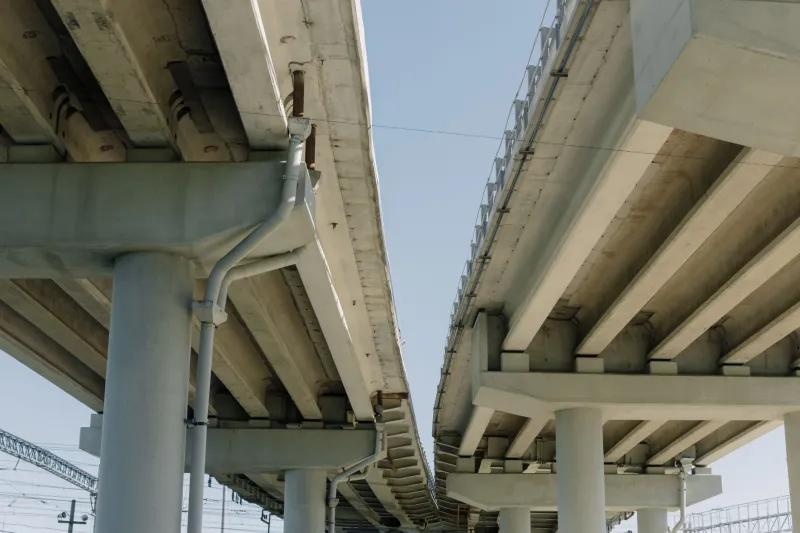
In the fall of 1982, a structural engineering firm contracted by a state transportation department submitted a routine inspection report on a major highway bridge in the mid-Atlantic region — a high-traffic crossing that handled tens of thousands of vehicles per day. The report was lengthy, dense with measurements and load calculations, and concluded, in its summary section, that the bridge was structurally "saft."
Not safe. Saft.
The clerk in the transportation department's infrastructure division who processed the report stared at that word for a while. "Saft" is not an engineering term. It is not any kind of term, at least not in American English. She flagged the report for clarification and sent it back to the engineering firm with a note asking what, exactly, "saft" meant in the context of a bridge assessment.
The firm, embarrassed, confirmed it was a typo. They meant "safe." The bridge was safe. They resubmitted a corrected report.
But the clerk's flag had already moved up the chain, and somewhere in that bureaucratic shuffle, a supervisor had interpreted the ambiguity differently. If the original report's conclusion was unclear, standard protocol in several states required a secondary inspection before the file could be formally closed. The supervisor signed off on one.
What the Second Team Found
The follow-up inspection team arrived at the bridge several weeks later. They were, by most accounts, not expecting to find anything. The original engineering firm was reputable. The bridge was relatively modern. This was, everyone assumed, a paperwork formality.
It was not a formality.
The second team's examination — more granular than the first, partly because they were specifically looking for anything the original report might have missed — identified a pattern of internal corrosion in a cluster of the bridge's primary tension members. The deterioration was not visible from standard inspection angles and had not triggered any of the surface-level indicators the first team had checked. But it was there, and it was serious.
The lead engineer on the second team later described the find in a professional journal article as "the kind of failure mode that announces itself only once." His assessment: without intervention, the affected members would have reached critical degradation within four to five years. Under peak load conditions — a summer holiday weekend, say, with traffic backed up bumper-to-bumper across the span — the consequences would have been catastrophic.
The Repair Nobody Knew Was Necessary
The bridge was closed for emergency structural work in early 1983. The repair project took the better part of a year and cost several million dollars. Local news coverage at the time framed it as routine maintenance work, which was technically accurate in the sense that maintenance was, in fact, occurring. The underlying reason for the urgency was not widely publicized.
The bridge reopened in 1984 and has remained in continuous service since. A subsequent inspection in the mid-1990s found no recurrence of the original corrosion issue. The repairs had held.
Engineers who have studied the case in the years since tend to describe it with a mixture of professional appreciation and visible discomfort. The appreciation is for the outcome. The discomfort is for what the outcome reveals: that the inspection protocol, as designed, would not have caught the flaw. The first team followed the correct procedure and missed it entirely. The second team found it only because they were looking more carefully, and they were looking more carefully only because a clerk was confused by a word that wasn't a word.
The Accidental Safety Net
There is a concept in systems engineering called a "defense in depth" — the idea that critical systems should have multiple overlapping safeguards so that no single failure cascades into disaster. The standard bridge inspection process of the early 1980s was not, by most analyses, a robust example of defense in depth. It relied heavily on the thoroughness of a single contracted team.
What saved this bridge was not a designed redundancy. It was a typo that created an unplanned one.
The clerk who flagged the report went on to a long career in state government and retired in the early 2000s. She has been quoted in at least one infrastructure safety publication reflecting on the incident with characteristic understatement: she didn't know anything about engineering, she said. She just knew that "saft" wasn't a word, and it seemed worth asking about.
The bridge still carries thousands of cars across its span every single day. Most of the drivers have no idea it exists in any meaningful sense — it is just a piece of road that happens to be elevated over water. They certainly don't know that the reason it's still there, rather than a line in a disaster retrospective, is that an engineer hit the wrong key on a typewriter forty-some years ago.
Precision saves lives. But sometimes, so does the spectacular lack of it.